Below you’ll find an outline of the skills recognition process and what’s required at each step.
A template is provided in the first step, which will be built out as you complete the activities at the end of each step.
While we estimate that the guide will take only a comparatively short time to read through, the time required to complete the activities will vary, depending on how organised and accessible your contributors and data are.
While this guide is laid out in a linear fashion, once you are familiar with the overall process, you can start from wherever makes sense for you.
Create a list of the skills you want to recognise via a digital credential and write a clear definition for each.
Identify elements (attributes) of the skill
List all of the attributes (abilities and capabilities), that make up the skills – henceforth called ‘elements’. Skill elements should contribute to the overall competence in the skill.
Ensure each element provides a clear context and understanding of what the overarching skill entails.
Write a description for each element – a skill statement that articulates the observable / measurable behaviour to be demonstrated by the student via an assessment.
Decide the awarding model you would like to implement for your skill. e.g. Does your institution have a mastery program with levels of mastery that can be applied to this model?
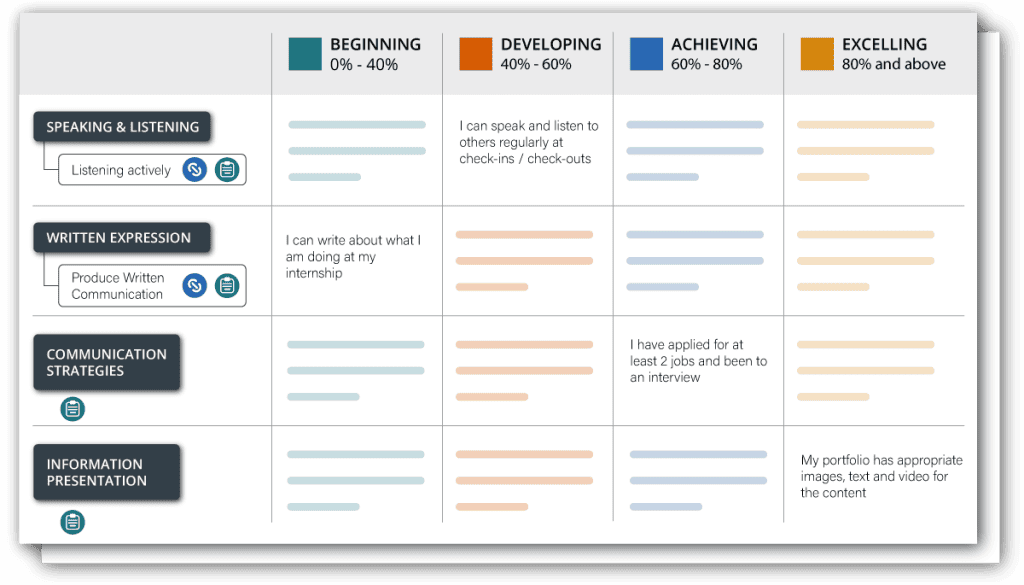
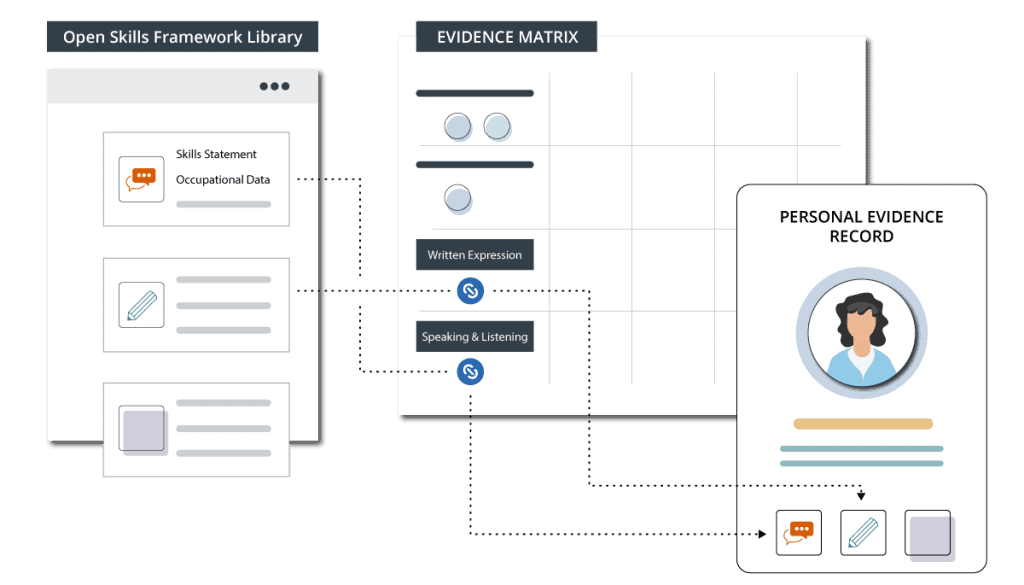
Create an Evidence Matrix rubric that includes the elements of the skill, their descriptions, the awarding criteria and the assessment methods.
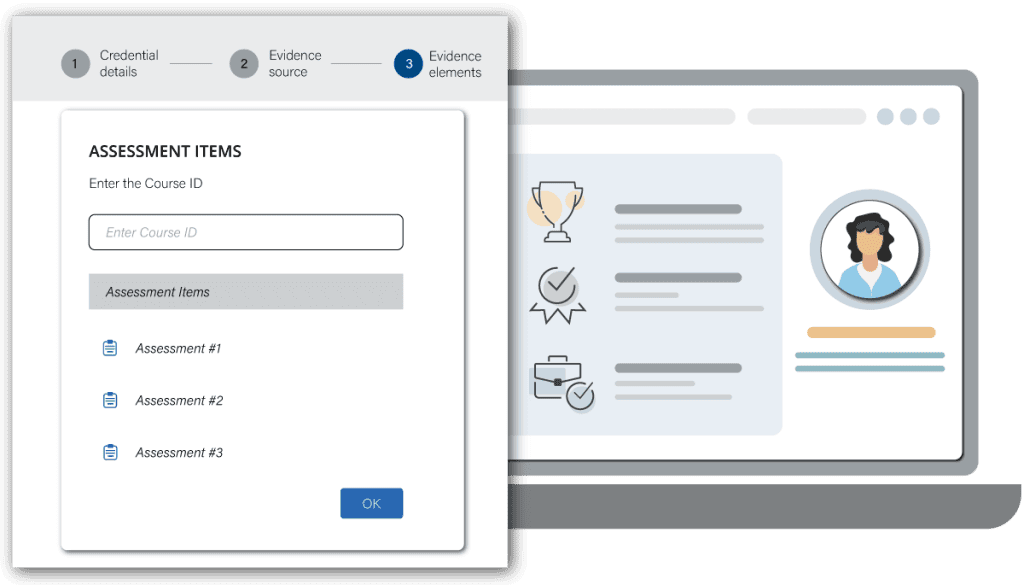
Note that each element must align to one or more assessment methods (e.g. quizzes, assignments or similar).
You will need to complete the above steps for each Credential you wish to award against.
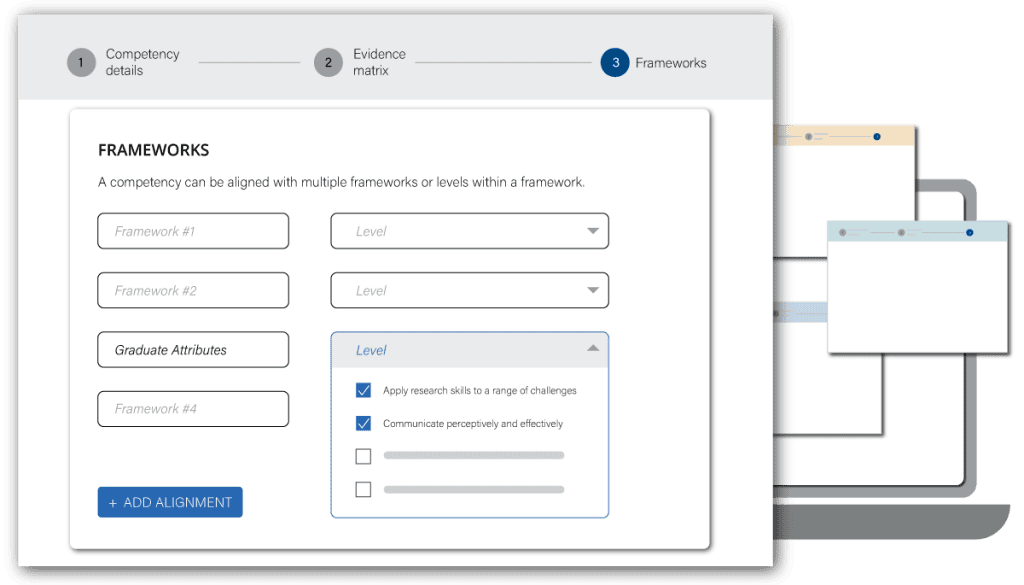
Align (map) elements to standardised skill definitions – rich skill descriptors (RSDs), such as those found on openRSD or Lightcast Skills – to provide clarification and include labour market data.
Have feedback about this guide?
We’d love to hear what you think of it, what you think could be added or answer any questions you may have. Let us know at comms@edalex.com
GET HELP PUTTING IT INTO ACTION
Edalex offer a range of professional services to help your organisation make the shift to skills – from initial consultation to in-house training to full implementation services. We can get you started and provision you and your teams with the ability to act fast.
All of our strategic consulting services can be conducted as platform agnostic (independent of our platforms), or in coordination with our skills-based platforms (Credentialateand openRSD).