
The Portrait of a Graduate framework redefines education by focusing on the holistic development of learners. Moving beyond grades, it emphasizes critical thinking, collaboration, and resilience – skills vital for life and work. Backed by digital credentials, Portrait of a Graduate showcases achievements, aligning education with community needs and real-world readiness. In this information-rich Credentialate Guide, we ask: What is the Portrait of a Graduate framework? What are the intentions behind the Portrait of a Graduate framework? What are the key components of a Portrait of a Graduate? How has the Portrait of a Graduate framework been implemented in real-world settings? What benefits does the Portrait of a Graduate approach provide for learners? How do digital credentialing solutions enhance the visibility of learner skills?
The Essentials: The Ultimate Guide to the Portrait of A Graduate
The Portrait of a Graduate framework is an educational transformation initiative that emphasises skills visibility and learner visibility, moving beyond traditional transcripts. It aims to define essential knowledge, skills, and mindsets necessary for future-ready graduates.
The intent behind creating the Portrait of a Graduate framework is to align educational outcomes with community needs and values, ensuring that graduates are prepared for the demands of the future.
The Portrait of a Graduate typically consists of five interconnected portraits: Learner, System, Educator, Leader, and Self. Each component outlines essential knowledge, skills, and mindsets that contribute to a holistic educational experience.
Real-world examples include case studies from states like Vermont and North Dakota where schools have successfully adopted Portrait of a Graduate initiatives. These implementations showcase innovative educational practices tailored to local community needs.
Learners benefit from personalised pathways and skill recognition beyond grades, which fosters learner self-direction and inquiry-based learning. This approach ensures equitable learning experiences that prepare them for success in various career paths.
Digital credentialing solutions like Credentialate enable learners to showcase their skills and accomplishments beyond traditional transcripts. They facilitate secure storage and sharing of digital records, ensuring authenticity and integrity while making it easier for learners to present their qualifications to potential employers or educational institutions.
Don’t have time to read it now?
Enter your email below to have a PDF copy sent direct to your inbox:
The Full Story: The Ultimate Guide to the Portrait of a Graduate
- Recent Learning Transformation Trends
- Why Implement the Portrait of a Graduate Framework
- Components of a Portrait of a Graduate
- Real-World Examples of Portrait of a Graduate Implementation
- Benefits for Different Stakeholders in Education with Portrait of a Graduate Approach
- Practical Applications of the Portrait of a Graduate Framework
- Supporting learners' Transitions to Higher Education and Lifelong Learning Opportunities
- Encouraging Learners to Engage in Volunteerism as Part of Their Holistic Development
- Leveraging Technology for Enhanced Visibility into Student Skills and Achievements with Digital Credentials
- The Future is Bright
The Portrait of a Graduate framework paints a vivid picture of the ideal graduate, going beyond traditional transcripts and grades. Its main purpose is to outline the comprehensive set of skills, knowledge, and mindsets that learners should possess by the time they finish their education. This isn’t just about academic achievement; it’s about shaping well-rounded individuals ready for life’s challenges and to navigate today’s modern workforce.
Educational thinkers like John Dewey have historically influenced this shift. Dewey advocated for education that focuses on real-world experiences and holistic development rather than rote memorization and standardised testing. His work laid the groundwork for today’s educational transformation. Now, more modern educators than ever are understanding that the Portrait of a Graduate framework is essential for both learners and educators.
Recent Learning Transformation Trends
There’s been a noticeable shift from traditional metrics to holistic assessments in recent years. Rather than just focusing on grades and test scores, the Portrait of a Graduate framework emphasises:
- Critical thinking
- Collaboration
- Communication
- Creativity
This approach ensures that graduates are not only academically proficient but also equipped with essential life skills, sometimes called soft skills or human skills. It’s about seeing the learner as a whole person, preparing them for both career success and personal fulfilment.
The biggest issue has been creating a verifiable, portable, and secure record of those soft skills. Grades are easy to record, and transcripts are simple to create. But as technology and the way we manage data improves, there is a better path forward.
Why Implement the Portrait of a Graduate Framework
The Portrait of a Graduate framework aims to cultivate future-ready graduates who can thrive in an ever-evolving world. This framework isn’t just about academic excellence; it’s about shaping well-rounded individuals who possess the knowledge, skills, and mindsets necessary for success.
Understanding the Intentions
The primary goal is to move beyond standardised test scores and grades. The principle is that all learning counts, no matter where it happened: home, life, volunteer work, and the classroom. The skills learned go beyond the fact that the learner “passed English” to skills like teamwork, collaboration, leadership, and more.
Community Alignment
Schools tailor their education models to reflect local values and expectations. For instance, a community with a strong agricultural presence might emphasise skills related to sustainability and environmental stewardship.
By integrating these shared aspirations into the educational journey, learners don’t just learn; they evolve into empowered individuals ready to contribute meaningfully to society.
Components of a Portrait of a Graduate
The Portrait of a Graduate framework is carefully pieced together to reflect the comprehensive development of learners and ideally consists of five interconnected portraits:
Aligning with Adult Learners' Needs
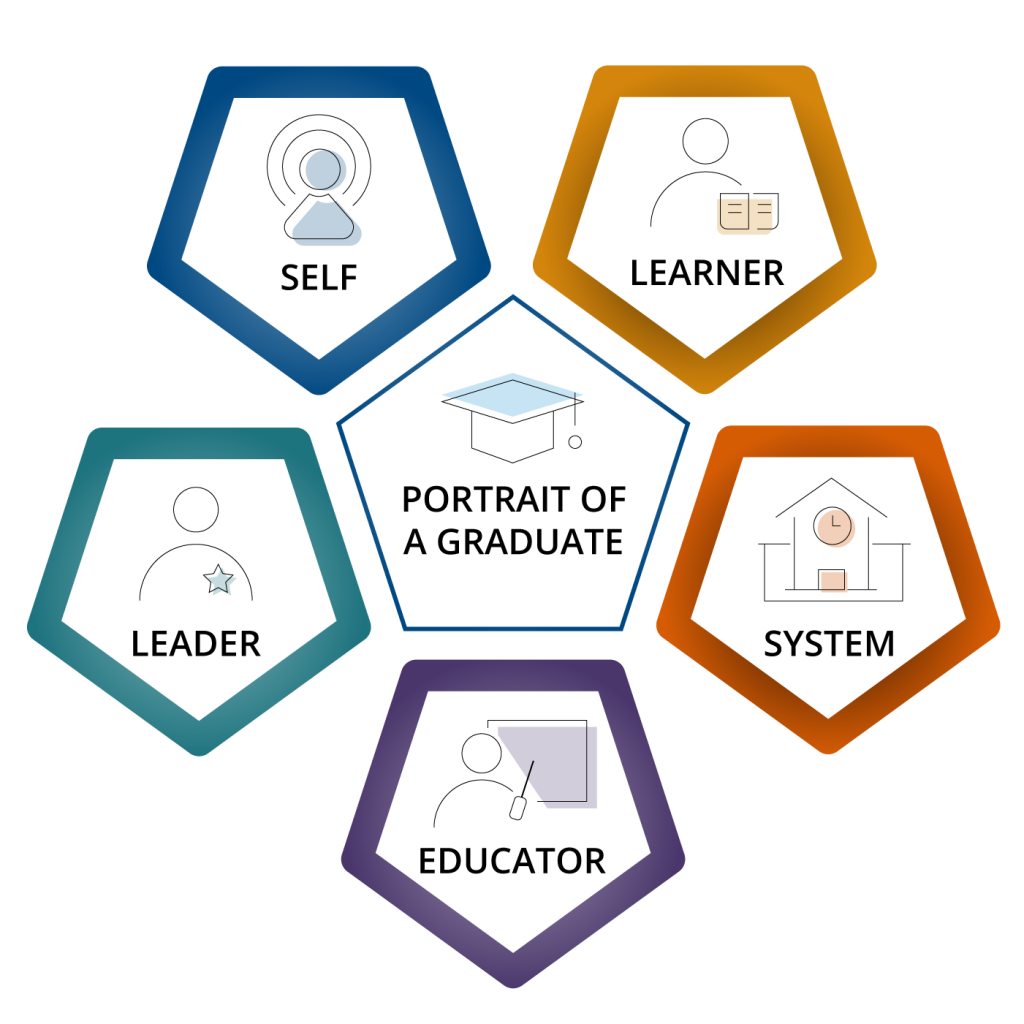
- Learner – the core portrait. It emphasises developing critical thinking, creativity, and problem-solving skills. The mastery of these skills becomes a central part of the learner evidence record (LER)
- System – this focuses on the educational environment, advocating for competency-based education and rigorous learning standards. It’s about creating a supportive infrastructure that nurtures every learner’s personal growth
- Educator – educators are the facilitators of transformation. They not only impart knowledge but also model lifelong learning, adaptability, and empathy
- Leader – this framework ideally cultivates leadership qualities in learners and staff alike. It promotes initiative, ethical decision-making, and the ability to inspire others
- Self – Perhaps the most personal portrait. It stresses self-awareness, emotional intelligence, and well-being as foundational elements for success in any path learners choose
Essential Knowledge, Skills, and Mindsets
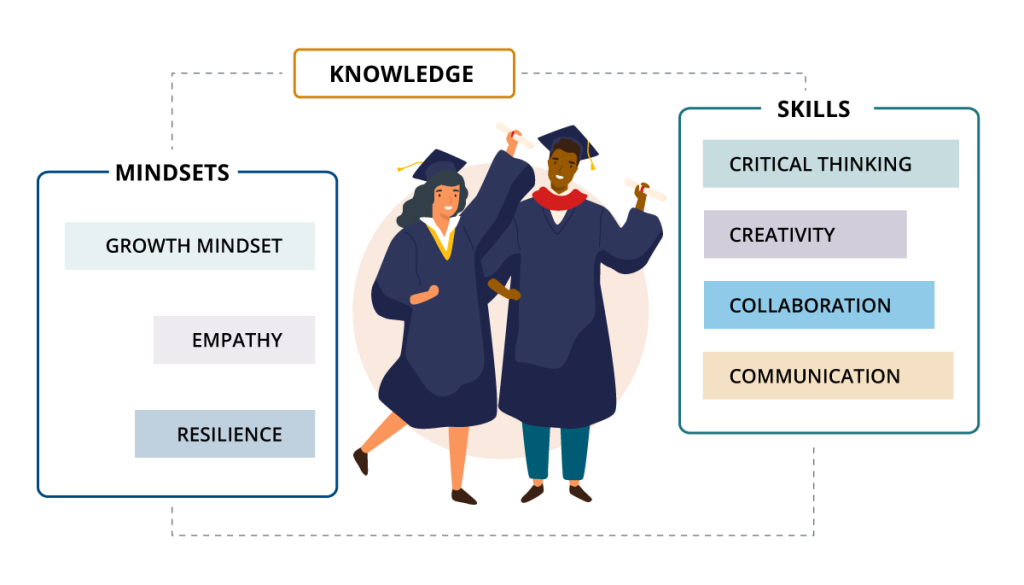
Each portrait is integrated with essential knowledge, skills, and mindsets that are vital for a holistic education:
- Knowledge: Robust understanding of core subjects plus interdisciplinary insights.
- Skills:
- Critical Thinking – analysing and evaluating information effectively.
- Creativity – approaching problems with innovative solutions.
- Collaboration – working well within diverse teams.
- Communication – clear articulation of ideas both orally and in writing.
- Mindsets:
- Growth Mindset – believing abilities can be developed through hard work.
- Empathy – understanding others’ perspectives.
- Resilience – bouncing back from setbacks with determination.
In this process, we create an ecosystem where learners thrive not just academically but as well-rounded individuals ready to face real-world challenges.
Real-World Examples of Portrait of a Graduate Implementation
Of course, for all the talk about the implementation of the Portrait of a Graduate framework into real-world applications, it’s most helpful to look at real-world examples and where these ideas have impacted learners and educators.
Vermont:
Vermont has been leading the way in adopting the Portrait of a Graduate framework. The state has integrated this initiative into its education reform efforts, focusing on personalised learning plans for each learner. Schools work together with local communities to determine what skills graduates should possess, ensuring that education aligns with both local values and broader societal needs.
The system emphasises:
- Learner Agency
- Global Citizenship
- Academic Proficiency
- Well being
- Critical Thinking and
- Problem Solving
- Communication Skills
While it will take time for data to be evaluated, the program has been incredibly effective and well-received by learners and educators alike.
North Dakota
North Dakota’s Department of Public Instruction has also embraced this innovative approach. Their framework emphasises critical thinking, collaboration, and communication skills, similar to the programs being implemented in Vermont. By involving educators, parents, and community stakeholders in the process, they have developed a community portrait that reflects the unique needs and aspirations of their population.
Culver City Unified School District (California):
Culver City schools have implemented the Portrait of a Graduate framework by integrating it into their curriculum development and assessment strategies. They prioritise real-world applications and project-based learning, equipping learners for both higher education and future careers.
Loudoun County Public Schools (Virginia):
Loudoun County has made significant strides in embedding this framework within its educational practices. Its focus is on nurturing global citizens who are not only academically proficient but also socially responsible. Its initiatives include projects that connect classroom learning to community service in a service-learning environment.
These examples demonstrate how various educational settings can adapt the Portrait of a Graduate framework to address specific community needs while fostering innovative educational practices. By prioritising comprehensive assessments beyond traditional measures like transcripts, these schools showcase the transformative potential of this all-encompassing guide.
Benefits for Different Stakeholders in Education with Portrait of a Graduate Approach
We’ve examined examples and some of this framework’s benefits, but let’s dive a little deeper and examine each stakeholder in turn.
Benefits for Learners Through Personalised Pathways and Skill Recognition Beyond Grades
As we have discussed, learners today need more than just traditional grades to thrive. They need equitable learning experiences that recognise and cultivate their unique strengths and interests. The Portrait of a Graduate framework is designed to address this by providing personalised pathways and skill recognition that go beyond the conventional grading system.
- Fostering Student Self-Direction – by allowing learners to take charge of their learning journey, they become more engaged and motivated. Personalised pathways enable learners to choose projects and subjects that align with their passions, which fosters a sense of ownership over their education.

- Recognizing Durable Skills – traditional assessments often overlook essential skills like critical thinking, creativity, and collaboration – skills that are crucial for success in today’s world. With the Portrait of a Graduate framework, these durable skills are acknowledged and nurtured, preparing learners for real-world challenges.
- Inquiry-Based Learning – encouraging learners to ask questions and seek answers cultivates a culture of curiosity and lifelong learning. This approach not only makes learning more engaging but also helps learners develop problem-solving skills that are vital in any career path.
- Holistic Development – the framework promotes the development of the whole child by integrating academic knowledge with social-emotional learning. This ensures that learners are well-rounded individuals capable of adapting to various life situations.
- Skill Recognition Beyond Grades – digital credentials can play a pivotal role here. Platforms like Credentialate allow learners to showcase their skills in a way that traditional transcripts cannot capture. These digital badges provide a detailed account of what the learner has achieved, making it easier for colleges and employers to understand the learner’s capabilities.
The Portrait of a Graduate framework empowers learners to pursue their interests passionately while developing essential life skills. This holistic approach prepares them not just for exams but for life’s challenges.
The shift towards such an inclusive educational model benefits not just the learners but also educators, communities, and employers by creating well-rounded individuals ready to contribute meaningfully in various contexts.
Impact on Educators and Local Communities When They Collaborate
When educators and local communities collaborate to define competencies for graduates, the benefits extend throughout the educational system. This collaborative approach ensures fair learning opportunities, giving all learners access to important skills and knowledge regardless of their background.
Essential skills such as critical thinking, teamwork, and problem-solving become the main focus. These skills are not only valuable in school but also crucial for lifelong learning and adaptability in various careers. By prioritising these competencies, we encourage learner independence and inquiry-based learning, motivating learners to take control of their own education.
Teachers gain a clearer understanding of the skills and mindsets learners need to succeed. This clarity allows for more targeted instruction, improving both teaching effectiveness and learner outcomes. The result is a community of learners who excel academically and act responsibly, ready to face real-world challenges.
Benefits at a Glance

Learners - access to fair learning opportunities and development of essential skills.

Educators - clearer teaching goals and improved teaching methods.

Local Communities - a well-prepared workforce and stronger community connections.
Involving local businesses in this process connects educational outcomes with market demands, ensuring that graduates have relevant skills. Community involvement enriches the educational environment, making learning a shared responsibility and reinforcing the idea that education goes beyond the classroom.
Job Market Readiness with Verified Skills and Competencies as Defined by the Portrait Framework
Employers today are looking for candidates who offer more than just academic knowledge. They need individuals equipped with durable skills – the kind that goes beyond specific job roles and industries.
Equitable learning experiences ensure all learners, regardless of background, have access to these essential skills, enhancing the talent pool available to employers.
Practical Applications of the Portrait of a Graduate Framework
We’ve stated that in the modern, fast-changing job market, it’s vital that learners develop skills that go beyond textbooks and traditional classroom learning. The Portrait of a Graduate framework steps into this gap by emphasising career readiness. But how does this work in practice?
Hands-On Learning Opportunities
Learners thrive when they engage in hands-on learning opportunities. Think about project-based learning, where learners tackle real-world problems by collaborating on innovative solutions. This not only bolsters their critical thinking but also hones their teamwork skills. Schools can partner with local businesses to provide internships or shadowing programs, giving learners a taste of the professional world before they even graduate.
Skill-Based Assessments
Traditional tests often fail to capture a learner’s full range of abilities. The Portrait of a Graduate framework shifts the focus to skill-based assessments that recognise competencies like problem-solving, communication, and adaptability. Digital credentials can be awarded for these competencies, making them visible to future employers.
Career-Focused Curriculum
Integrating career-focused elements into the curriculum is another way to prepare learners for their future jobs. Courses can be designed around industry needs, offering specialised tracks in fields like technology, healthcare, or arts. This way, learners are already familiar with the tools and concepts they’ll encounter in their careers.
Collaboration with Industry Experts
Bringing industry experts into the classroom bridges the gap between education and employment. Guest lectures, workshops, and mentorship programs offer learners insights from seasoned professionals. These interactions demystify career paths and make them more attainable.
Real-World Projects
Encouraging learners to work on real-world projects gives them practical experience while still in school. Whether it’s developing a marketing plan for a local non-profit or creating an app to solve community issues, these projects help learners apply theoretical knowledge in tangible ways.
Soft Skills Development
In addition, soft skills like leadership, communication, and emotional intelligence, which are crucial for any career, are often overlooked in traditional education models. The Portrait framework ensures these soft skills are part of the learning journey.
The aim is clear: equip learners with a toolkit that includes both hard skills relevant to their chosen careers and soft skills that enhance their overall employability.
By focusing on these practical applications, educators can ensure that learners are not just academically prepared but are ready to tackle the challenges of the workforce head-on.
Supporting Learners' Transitions to Higher Education and Lifelong Learning Opportunities
Navigating the leap from K12 to college can be daunting. The Portrait of a Graduate framework eases this transition by equipping learners with essential skills and mindsets required for higher education and beyond.
Career Readiness and Workforce Development
Learners prepared under this framework are not just academically prepared; they possess real-world competencies that make them attractive to colleges and employers alike. Think of it as a holistic passport – a comprehensive guide showcasing their readiness for the next big steps.
Beyond Transcripts
Transcripts often tell a limited story. The Portrait of a Graduate shifts focus from traditional grades to a broader spectrum of achievements, fostering lifelong learning. This approach ensures learners are not only college-ready but also equipped for continuous growth in an ever-evolving job market.
By aligning educational outcomes with real-world requirements, the framework supports seamless transitions into higher education and lifelong learning opportunities, making true learning transformation possible.
Encouraging Learners to Engage in Volunteerism as Part of Their Holistic Development
Volunteerism isn’t just about clocking hours; it’s a powerful tool for holistic development. When learners engage in community involvement, they gain real-world experience that can’t be taught in a classroom. This hands-on approach enhances their K12 to college transition and boosts career readiness by fostering essential soft skills like leadership, teamwork, and empathy.
- Builds Character – volunteering instils a sense of responsibility and civic duty
- Enhances Workforce Development – employers value candidates who have demonstrated commitment to community service
- Strengthens Community Ties – learners who volunteer develop a deeper connection to their local communities
Incorporating volunteerism within the Portrait of a Graduate framework provides a balanced approach to education. It ensures learners are not only academically prepared but also socially and emotionally equipped for the future.
By embedding volunteerism into educational contexts, schools can better align with community needs and values, promoting well-rounded graduates ready for both higher education and meaningful careers.
Leveraging Technology for Enhanced Visibility into Student Skills and Achievements with Digital Credentials
Ever wished your resume could talk? With digital credentialing solutions like Credentialate, you’re almost there. These platforms are reshaping how we view learner achievements, making it possible to showcase skills and accomplishments beyond what traditional transcripts can capture. Let’s dive into how this tech works and why it’s such a game-changer.
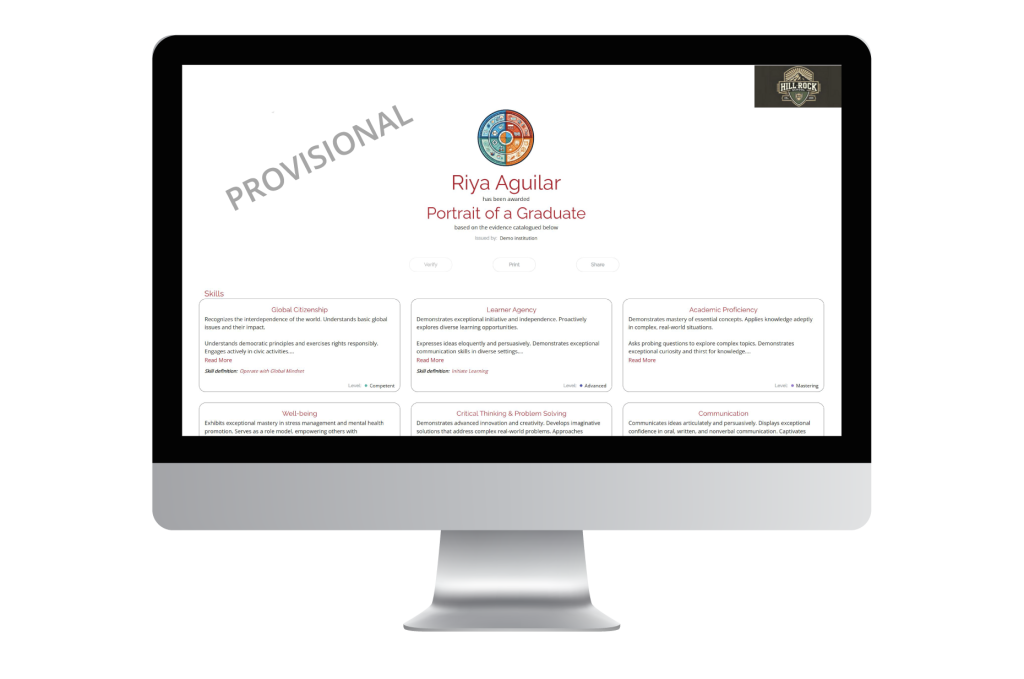
Digital credentials provide a holistic view of a learner’s capabilities. Instead of just listing courses completed or grades obtained, these digital records encapsulate skills, projects, and competencies that learners have mastered. Imagine a world where you can click on a Personal Evidence Record and see the specific activities or projects that led to its award. This kind of detail paints a much richer picture of a learner’s abilities.
Platforms like Credentialate facilitate the secure storage and sharing of these digital records. It’s like having an online portfolio that’s always up-to-date and easily accessible. No more scrambling to gather documents; everything is neatly organised and ready to impress potential employers or educational institutions.
These tech solutions make it nearly impossible to forge or alter records, fostering trust among stakeholders in both the education and employment sectors. Employers can be confident that the skills listed are verified, while educational institutions can trust the legitimacy of transferred credits or qualifications.
- Skill Recognition Beyond Grades – traditional transcripts often fail to capture the full range of a learner’s abilities. Personal digital credentials highlight soft skills like leadership, teamwork, and problem-solving all critical for today’s job market.
- Data Mobility – these credentials are not just static records; they can be updated as learners acquire new skills or complete additional training. This dynamic nature makes them highly adaptable to lifelong learning paths.
Global Acceptance – Using standardised skills data, digital credentials can be recognised across borders, making international applications smoother for both learners and employers.
The Future is Bright
Next generation digital credentials are not just about storing information; they’re about telling a story – a story that captures the essence of what learners have learned and achieved throughout their educational journey. As we continue to embrace this technology, we’re not just enhancing visibility into learner skills; we’re empowering learners to take control of their narratives.
Digital credentials provide a verifiable and portable way to showcase learner skills and achievements. This enhances the Portrait of a Graduate beyond traditional transcripts, offering a holistic view of one’s capabilities.
With data mobility, learners can effortlessly share their digital credentials with potential employers or educational institutions, streamlining the transition from education to career.
- Digital credentialing solutions empower educators to track and assess learner growth more effectively. This ensures a comprehensive guide for personalised learning pathways.
- Digital credentials include more detailed information about skills and competencies, giving a clearer picture than standard grades.
Digital credentials not only make communication more efficient but also align with the Portrait of a Graduate framework by providing a thorough representation of learner achievements.
Want a copy? Email it for later
Enter your email below to have a PDF copy sent direct to your inbox: