Tag: employability

  • Skills for the Frontline: How Skills Visibility Addresses Equity

    Skills for the Frontline: How Skills Visibility Addresses Equity

    Key takeaways:

    1. Inequity is often a recognition issue – frontline workers possess valuable skills that are frequently lost because they aren’t documented or standardized. Achieving equity requires a shift from degree-based screening to skills-based recognition.
    2. Evidence is the great equalizer – digital credentials must be backed by “proof.” Edalex’s Personal Evidence Record (PER) allows learners to carry their assessments and workplace feedback with them, providing the leverage needed to advance in non-linear careers.
    3. Standards create trust – for micro-credentials to work, they need a common language. Credentialate provides the intelligence to align college programs with industry frameworks, ensuring that the “skills currency” has a stable, recognized value for both learners and employers.

    Frontline workers keep our businesses, hospitals, and communities running. Yet, despite their essential contributions, many find it nearly impossible to move forward in their careers. It’s not because they lack skills; it’s because the skills they’ve built are effectively invisible.

    For years, workers in retail, manufacturing, and healthcare have developed deep expertise on the job. However, this wealth of experience – often built over a decade or more – is difficult to document, explain, or transfer between employers. In a “degree-first” world, these workers are often screened out before they even have a chance to interview.

    To achieve true workforce equity, we must move beyond the diploma as the sole arbiter of value. We must make skills visible.

    The Fragmentation Trap: Why Skills Get Lost

    Frontline workers are the ultimate lifelong learners, though they may not use that academic label. They gain competencies through short-term training, apprenticeships, community programs, and thousands of hours of on-the-job problem-solving.

    The problem is that these experiences sit in separate, siloed systems that don’t communicate.

    • The recognition gap – when hiring decisions rely on job titles or degrees, the nuanced skills of a retail manager or a healthcare assistant go unnoticed.
    • The transferability wall – when a worker moves from one company to another, or from a job into a community college program, their prior learning often “disappears” because there is no standardized way to prove it.

    Community Colleges see the impact of this fragmentation firsthand. They serve the learners balancing work, family, and limited time – learners who cannot afford to “re-learn” what they already know just to satisfy a bureaucratic requirement.

    Community Colleges: The Crossroads of Equity

    Community Colleges sit at the heart of the workforce system. They are the primary engine for social mobility, working with employers who need talent now and partnering with community organizations to align training with real-world outcomes.

    However, being at the center comes with challenges. Without the right “plumbing,” credentials don’t stack cleanly, and valuable experience is lost in transition. By focusing on skills over silos, Community Colleges are helping bring order to a complicated system. They are shifting the focus from paperwork to potential.

    “Skills-based learning can provide an equitable and fast-tracked path to new careers for job seekers while expanding and diversifying talent pipelines for employers.” – World Economic Forum

    Making skills visible isn’t just a strategic business practice – it is a matter of fairness.

    SkillsAware – AI-Powered Recognition of Prior Learning

    For many frontline workers, the biggest barrier to mobility is that their most valuable learning happened outside a traditional classroom. This is where SkillsAware becomes a critical tool for equity.

    SkillsAware is a human-centered, AI-powered skills recognition engine that revolutionizes the way prior learning is captured and recognised:

    • Conversational evidence gathering – instead of a complex, daunting manual application, learners engage with a guided generative AI assistant. This assistant helps them identify the skills they’ve accumulated through life and work and prompts them to provide specific evidence – like resumes, performance appraisals, or photos of their work – needed to prove their competence.
    • Optimizing RPL and CPL – for Community Colleges, SkillsAware dramatically streamlines Recognition of Prior Learning (RPL) and Credit for Prior Learning (CPL) while keeping the human in the loop as the final arbiter. It maps the evidence collected against thousands of industry-defined competency standards, providing a “Skills IQ Confidence Score.”

    This technology removes the “paperwork barrier” that often stops frontline workers from even attempting to get credit for their experience. By making the recognition process faster, more accessible, and more affordable, SkillsAware ensures that workers don’t have to repeat training for skills they already master – accelerating their journey to higher-wage roles.

    Credentialate – Evidence-Backed Recognition

    Once SkillsAware has helped a learner identify and validate their skills, Credentialate provides the digital infrastructure to formally recognize that achievement.

    Credentialate captures the siloed data from the recognition process and maps it into a Personal Evidence Record (PER). This ensures that the “proof” generated during the SkillsAware conversation is embedded directly into a digital credential.

    • Visibility for employers – the combination of these platforms means an employer isn’t just seeing a badge title; they are seeing the verified evidence, work samples, and industry-standard alignments that back it up.
    • Leverage for learners – for the worker on the frontline, this creates a portable Learner Passport. Their learning doesn’t disappear when they change jobs; it remains a verifiable asset they can use to negotiate for better pay or more advanced training.

    “We have to move away from the idea that learning only counts if it happens in a classroom. Our goal is to empower community colleges to capture the full breadth of a learner’s capability – using AI-powered recognition to bridge the gap between real-world experience and formal credentials. When skills are made visible and portable, the journey from learner to earner becomes shorter and more equitable.” – Margo Griffith, Principal Skills Consultant, Edalex

    The Future – Skills are Visible and Move with the Worker

    Getting hired is only the first step. For true equity, workers need Skill Mobility. They need to be able to track their progress on a Learner Dashboard, seeing how their current skills bridge the gap to their next promotion or a new industry entirely.

    When skills travel with the worker, career ladders become more than just a metaphor – they become a reality. Community Colleges are leading the way by building systems around the learner’s journey rather than the institution’s paperwork.

    There is no single fix for workforce inequity, but the path forward is clear: clearer skill definitions, better evidence, and stronger collaboration.

    When we use tools like SkillsAware and Credentialate to make the invisible visible, opportunity depends less on where someone started and more on what they can demonstrably do. That shift changes the game for the people on the frontline – and for the communities that rely on them.


    FAQs

    1. How does skills visibility promote workplace equity?

    Skills visibility promotes equity by allowing candidates – especially those from frontline or non-traditional backgrounds – to prove their competencies through evidence rather than relying solely on expensive degrees or specific job titles that they may not have had the opportunity to hold.

    2. What are the main barriers to career mobility for frontline workers?

    The primary barriers include a lack of standardized documentation for on-the-job learning, the “paper ceiling” (degree requirements for entry-level roles), and fragmented data systems that prevent skills from transferring between different employers or educational programs.

    3. What is a Learner Passport and how does it help workers?

    A Learner Passport is a digital wallet where workers can store and share their verified credentials and evidence of skills. It helps workers by making their achievements portable, allowing them to take their “proof of skill” with them as they move between different jobs or schools.

    4. Why is “Recognition of Prior Learning” (RPL) important for community colleges?

    RPL is critical because it honors the expertise adult learners already possess. By using tools like SkillsAware to validate this learning, community colleges can fast-track students through programs, saving them time and money while increasing their completion rates.

    5. How does Edalex Credentialate verify “soft skills” or durable skills?

    Credentialate verifies soft skills (like communication or problem-solving) by linking them to specific evidence and artefacts, such as peer reviews, instructor feedback, or assessment results. This moves these skills from “claims” on a resume to verifiable data in a Personal Evidence Record.


  • Bridging the Gap: Industry Partnerships and Real-World Relevance in the Skills Economy

    Bridging the Gap: Industry Partnerships and Real-World Relevance in the Skills Economy

    Key takeaways:

    • Workforce education is co-created – industry partnerships have evolved from advisory roles to genuine co-creation, with employers investing resources, co-designing curricula, and embedding paid apprenticeships to build job-ready talent pipelines at Community Colleges.
    • The goal is skills alignment and standardization – effective partnerships require Community Colleges to map their curriculum to recognized industry frameworks and standards, ensuring that what is taught perfectly mirrors what the labor market demands and closing the historical education-employment gap.
    • Transparency is the final bridge – technology is required to translate co-creation into verifiable value. Edalex platforms transform partnership outcomes into trusted, portable skills data by standardizing skill language (SkillsAware) and issuing evidence-backed credentials (Credentialate).

    The most rapidly expanding and successful workforce programs are now found in Community Colleges, thriving through strong industry collaboration – a movement that is eclipsing the scope of traditional corporate training centers.

    As the pace of the skills economy increases, the strategic partnership between employers and Community Colleges is no longer optional; it is essential. This collaboration directly aligns learning with employment, higher wages, and unparalleled opportunity for economic and social mobility. Community Colleges are uniquely positioned to be the convener, the trusted third party that ensures labor market demand meets classroom reality.

    Where Demand Meets Design – The Historical Gap is Closing

    Historically, a gap has existed between academic institutions and the labor market. What was taught often lagged behind what was required, leading to job-ready students but skill-short employees.

    Today, that gap is closing fast. Strategic industry partnerships now enable colleges to move beyond simple suggestions to genuine co-creation: they co-design curricula, co-deliver training, and co-build next-generation talent pipelines for critical sectors.

    “We truly believe Community Colleges are essential to developing a world-class workforce. When we invest in these partnerships, we are investing in our future talent and securing our supply chain,” says Leah Curry, President of Toyota Motor Manufacturing West Virginia.

    The success of the Toyota Advanced Manufacturing Technician (AMT) program, often highlighted in press coverage of their partnership with CCs, serves as a powerful model. It demonstrates that when a company commits resources, the resulting talent pipeline is unmatched.

    From Collaboration to Co-Creation – The Depth of New Partnerships

    Modern industry partnerships extend far beyond passive advisory boards that meet once a quarter. They are deep, operational commitments that drive curriculum innovation, resulting in a co-built, co-validated, and co-delivered model of education.

    Across the country, forward-thinking employers are helping Community Colleges:

    1. Direct curriculum integration – employers share detailed skill requirements, enabling colleges to map in-demand skills directly into the curriculum. This ensures that every module taught is directly relevant to a specific industry need, often utilizing standardized frameworks (like O*NET or openRSD).
    2. Resource and infrastructure investment – partnerships result in tangible assets. Companies provide cutting-edge equipment, simulators, and technology – often too expensive for a college budget alone – and even supply current industry practitioners to serve as adjunct instructors, bridging the theory-practice divide.
    3. Embedding paid, experiential learning – the model is shifting from unpaid internships to structured, paid programs. Colleges and industry co-develop apprenticeships, hands-on labs, and real-world simulation environments. This model creates an immediate earnings path for students while ensuring they graduate with documented, verifiable work experience.
    4. Aligning with recognized credentials – partnerships ensure programs align with and embed industry-recognized micro-credentials, certifications, and talent frameworks. This moves the focus away from the degree title and onto the validated, recognized skills, streamlining the hiring process for the employer.

    This level of shared accountability elevates workforce education to its most powerful form, serving both the student and the local economy simultaneously.

    The Challenge of Proving Partnership Value

    Even with the deepest partnerships, a key challenge remains: the skill translation gap.

    How does a college effectively communicate the value of a co-created program to a hiring manager who is still looking at a traditional transcript?

    The success of these partnerships depends on their ability to generate talent whose skills are trusted, instant, and transparent. Without a common digital language, the skills gained in a sophisticated apprenticeship program can remain hidden, indistinguishable from traditional academic credit.

    Making Skills Visible With Edalex – Creating The Transparency Ecosystem

    This is where Edalex’s technology becomes transformational, providing the digital infrastructure needed to translate partnership outcomes into measurable, verifiable career advantage.

    Edalex platforms ensure the skills taught in partnership are visible, verified, and valuable across the entire ecosystem:

    Credentialate – The Skills Data Plumbing and Verified Evidence

    Credentialate is the SaaS platform that creates the skills data ‘plumbing’ needed for evidence-backed recognition. It moves beyond basic digital badges to issue skills-rich digital credentials that act as a true Personal Evidence Record (PER).

    • Verifiable proof – Credentialate captures and validates the specific evidence of learner achievement, making every skill transparent and trustworthy for industry partners.
    • Portability – learners gain a self-sovereign, employer-friendly way to share their competencies, accelerating their transition from learner to earner.

    SkillsAware – AI-Powered Recognition and Standards

    When Community Colleges and employers come together with a shared skills language and verified evidence, profound results are unlocked:

    • For students – they see clear, accelerated pathways from learning to employment, securing higher wages and gaining confidence.
    • For employers – they hire with confidence, reduce training costs, and secure a sustainable, future-proof talent pipeline.
    • For colleges – programs meet a verifiable demand for evidence of skills, boosting enrollment and demonstrating tangible return on investment to the community.
    • For local economies – the partnership becomes a foundational engine for growth, attracting investment and enhancing regional competitiveness.

    Community Colleges are not just meeting workforce needs – they are proactively anticipating and shaping them in partnership with employers. And with platforms like Credentialate and SkillsAware, they’re making every skill visible, verifiable, and valuable, ensuring the success of the skills-first model.


    FAQs

    1. How has the role of industry partnerships in community colleges changed?

    Industry partnerships have shifted from passive advisory roles to active co-creation. Employers now co-design curricula, co-deliver training, provide equipment, and embed paid apprenticeships to build a talent pipeline specifically tailored to their immediate and future skill needs.

    2. What is co-creation in the context of workforce education?

    Co-creation is a model where employers and community colleges share responsibility for the educational outcome. It means jointly defining program learning objectives, validating curriculum relevance, and often co-funding or co-instructing the training, leading to co-built, co-validated, and co-delivered programs.

    3. What is the value of aligning curriculum with industry-recognized credentials?

    The value is immediate relevance and trust. Aligning curriculum with industry-recognized credentials (like certifications or micro-credentials) ensures that the skills being taught are standardized and verifiable, making the graduate highly marketable and streamlining the hiring process for industry partners.

    4. How does Edalex Credentialate support industry-community college partnerships?

    Credentialate supports partnerships by providing the digital infrastructure to issue verified, evidence-backed credentials. This validates the quality of the co-created training, giving industry partners confidence that the graduate’s skills are exactly what the partnership intended to deliver.

    5. What role does Skills Aware play in creating a common skills language?

    Skills Aware accelerates skills recognition by leveraging AI to measure competencies against established industry frameworks (like O*NET). This ensures that the language used by the college to describe its programs is standardized and mirrors the language used by industry for job roles and talent acquisition.

  • Community Colleges: America’s Indispensable Engine of the Skills-First Economy

    Community Colleges: America’s Indispensable Engine of the Skills-First Economy

    Key takeaways:

    • Community Colleges are the indispensable workforce engine – Community Colleges are the most agile, accessible, and essential institutions for addressing the national middle-skill job crisis, functioning as the primary pipeline connecting local training directly to labor market demand.
    • Visibility is the new barrier to entry – the shift to skills-first hiring exposes the failure of opaque academic transcripts. For graduates to realize their potential, Community Colleges must adopt technology to ensure their skills are verifiable, standardized, and portable.
    • Skills intelligence closes the loop – platforms like SkillsAware (for skills recognition and alignment) and Credentialate (for personalised skills credentials) provide the necessary digital infrastructure to transform course completion into trusted, data-rich evidence that employers can immediately verify and trust.

    Forget what you think you know about America’s talent pipeline. The real workforce revolution isn’t happening just in tech hubs – it’s being powered by your local Community College.

    For decades, Community Colleges have been quietly serving as the essential pathway for millions seeking accessible education. They were often viewed as the bridge to four-year universities or a convenient local option. But in today’s rapidly accelerating skills-first economy, they are emerging as the main engines driving opportunity, equity, and sustainable regional economic growth.

    The national focus has decisively shifted from academic pedigree to demonstrated potential. Businesses are not just looking for a diploma; they are actively searching for talent that possesses clear, verifiable, and job-ready skills. Community Colleges are uniquely positioned to answer that call, serving as the critical link between learning and the labor market.

    “Community Colleges have always been the heartbeat of workforce development,” says Dr. Joe Schaffer, President of Laramie County Community College. “We’re not only preparing students for jobs – we’re creating clear, skills-based pathways to lifelong careers. Our mission is to transform lives through accessible skills education.”

    From Degrees to Doing – Why Community Colleges Own the Middle-Skill Market

    The demand for middle-skill workers – those requiring postsecondary training but not a four-year degree – continues to soar in critical sectors like healthcare, IT, manufacturing, and clean energy. This demand creates both a massive economic opportunity and a national workforce crisis if the talent pipeline fails to keep up.

    Community Colleges have the agility that larger institutions lack to meet this immediate need. They are answering the employer question, “What can you DO?” through several strategic shifts:

    • Deep local alignment – unlike distant universities, Community Colleges are embedded within their communities, allowing them to rapidly co-design Career and Technical Education (CTE) programs with local industries. This ensures curriculum relevance and a direct line of sight to open jobs.
    • Hands-on competency – learning is focused on tangible outcomes. Students gain skills in real-world environments – from advanced simulation labs for nursing to accredited automotive facilities – where competency is the measure of success, not just completion.
    • Equity and access – Community Colleges are the most affordable and accessible entry point to postsecondary success. They serve a diverse population, including working adults, veterans, and first-generation students, making them the ultimate vehicle for economic mobility and closing equity gaps.

    The Hidden Challenge – Making Skills Transparent

    Community Colleges are producing welders, nurses, cybersecurity analysts, data technicians, and thousands of other skilled professionals who keep America running every single day. They are the essential economic engine.

    However, a fundamental challenge remains: Recognition.

    Even the most talented Community College graduate or certificate holder faces an obstacle in the hiring process: the skills they worked hard to acquire are often invisible on traditional academic transcripts.

    • How does a hiring manager verify the specific welding competency earned in a certificate program?
    • How does a learner prove their critical thinking skill from a non-credit course?
    • The outdated system of grades and course titles fails to translate complex achievement into clear, trusted language that employers and transfer institutions understand.

    The power of skills lies in their transparency and portability. Without technology to make skills visible, verifiable, and aligned to a common language, the value of that hard-won learning remains trapped within the institution.

    The Solution – Skills Intelligence and Personalized Evidence

    To lead the skills-first movement, Community Colleges require a digital transformation to empower their students. This is where the intersection of skills intelligence and digital credentialing is rewriting the playbook.

    Platforms like Credentialate and SkillsAware are helping Community Colleges surface and validate what students actually know and can do, in ways that resonate with employers.

    Credentialate: The Skills Data Plumbing and Verified Evidence

    Credentialate is the SaaS platform that creates the skills data ‘plumbing’ needed for evidence-backed recognition. It moves beyond basic digital badges to issue skills-rich digital credentials that act as a true Personal Evidence Record (PER).

    • Skills visibility – Credentialate captures siloed learner data and maps it to frameworks, revealing the workplace skills hidden in the curriculum and providing clear insights for better employability outcomes.
    • Verifiable proof – each credential embeds verified evidence and artefacts of achievement, making every skill transparent, trusted, and portable. Learners gain a self-sovereign, employer-friendly way to accelerate their transition from learner to earner.

    SkillsAware: AI-Powered Recognition and Standards

    This human-centered, AI-powered service is a skills recognition engine. It accelerates and optimizes the crucial process of identifying, collecting, and validating evidence of skills for pathways like Recognition of Prior Learning (RPL) and Credit for Prior Learning (CPL). SkillsAware rigorously collects and collates a learner’s capabilities and aligns them to industry-validated skills, ensuring that skills data from all types of learning, non-formal and formal, is standardized.

    “Community Colleges aren’t just one part of the education system – they are the most vital engine for today’s workforce. Our work is to give that engine power, using skills intelligence to ensure that every competency gained directly translates into verifiable, portable data that employers can immediately trust and reward.” – Margo Griffith, Principal Skills Consultant, Edalex

    Together, these two platforms enable community colleges to manage the full skills lifecycle – from mapping and standardization (SkillsAware) to verified issuance and portability (Credentialate) – closing the critical loop between education and employment.

    The Engine Under the Hood of America’s Economy

    Community Colleges are more than just local institutions; they are the most critical talent engine for the modern workforce. They are where learning meets the labor market – and where potential becomes tangible economic reality.

    In a world shifting from pedigree to potential, community colleges are no longer the alternative. They are the advantage. By embracing technologies that make skills transparent, they are maximizing their impact on economic mobility and securing America’s competitive future.


    FAQs

    1. Why are Community Colleges called the “most vital engine” for the modern workforce?

    Community Colleges are vital because they are geographically focused, affordable, and agile, enabling them to quickly adapt their Career and Technical Education (CTE) programs to meet the urgent and massive demand for middle-skill workers in sectors like healthcare, IT, and manufacturing.

    2. What is the difference between a traditional transcript and a Personal Evidence Record (PER)?

    A traditional transcript lists courses and grades, which is often opaque. A Personal Evidence Record (PER) is a skills-rich, digital record (like those issued by Credentialate) that embeds verified evidence of specific, measurable competencies and achievements that employers can easily review and trust.

    3. How does skills recognition technology help Community Colleges with equity?

    Skills recognition technology, such as SkillsAware, helps equity by making all forms of learning visible and valuable, including those gained through non-credit programs, prior work experience, and stackable certificates. This empowers diverse, lifelong learners by ensuring all their competencies contribute to economic mobility.

    4. How can Community Colleges ensure the skills they teach are industry-aligned?

    Community Colleges ensure industry alignment by moving beyond annual reviews to continuous skills intelligence. This involves forming strategic employer advisory boards and using platforms like SkillsAware to map curriculum against up-to-date industry frameworks, ensuring relevance and standardization.

    5. What are middle-skill jobs and why are they critical to the US economy?

    Middle-skill jobs are positions that require more than a high school diploma but less than a four-year bachelor’s degree. They are critical because they make up the majority of job vacancies in high-growth, essential sectors (like manufacturing and healthcare) and are the focus of Community College workforce development.

  • Skills Over Degrees: How Community Colleges Are Forging the New Currency of Opportunity

    Skills Over Degrees: How Community Colleges Are Forging the New Currency of Opportunity

    Key takeaways:

    • Skills are the new currency for workforce readiness – the job market is urgently prioritizing demonstrated skills and competencies over traditional diplomas to fill millions of middle-skill jobs created by the looming retirement gap. Community Colleges are the most agile providers to meet this immediate demand.
    • Agility through stackable credentials – Community Colleges are transforming access and equity by adopting flexible, stackable credentials (certificates, micro-credentials) that let lifelong learners enter the workforce quickly and build toward a degree over time, ensuring a viable learner-to-earner pathway.
    • Skills visibility is the critical barrier – for skills to be valuable, they must be proven. Platforms like Edalex Credentialate and SkillsAware are essential for institutions to map curriculum to skills frameworks and issue verifiable, data-rich digital credentials that make graduate competencies transparent and portable to employers.

    The world of work is fundamentally shifting – and skills are rapidly becoming the most valuable currency for career success and economic mobility.

    For decades, the four-year degree was viewed as the non-negotiable ticket to a professional career. But today, a disruptive transformation is underway. Employers are looking past traditional diplomas and asking a new, more urgent question: “What can you demonstrably DO?”

    Community Colleges – once viewed primarily as a bridge to four-year universities – are now strategically positioning themselves as dynamic career launchpads. These institutions are uniquely designed to equip diverse learners with the practical, job-ready skills and technical competencies that align directly with evolving workforce requirements.

    “We have built a renowned reputation for working across sectors to align workforce needs with skills education… ensuring that certificates, badges, micro-credentials, and degrees are integrated in pathways to success.” – Dr. Walter Bumphus, President & CEO, American Association of Community Colleges

    The Economic Imperative: Why “Skills Over Degrees” Matters

    The shift toward skills-based hiring is not a trend – it is an economic imperative driven by two critical forces:

    1. The looming middle-skills gap – the U.S. labor market faces a profound skills crisis. As Baby Boomers retire, an estimated 75 million workers are expected to leave the labor force by 2030. Crucially, the fastest-growing segment of job openings are middle-skill positions – roles that require postsecondary training, but not necessarily a four-year degree, in sectors like healthcare, IT, and advanced manufacturing.

      One way to help close this massive gap is through rapid, affordable, and flexible skills-focused training. Community Colleges, with their open-access model and deep local ties, are the most effective solution for generating a qualified talent pipeline at scale.
    2. Employer focus on competency – across industries, employers are redesigning their talent strategies, focusing less on institutional prestige and more on demonstrated competencies. As the Harvard Business Review noted recently, “the best leaders know a person’s skill set and willingness to learn are more important than the degree they hold.” This translates to hiring managers seeking clear, verifiable evidence of a candidate’s skills, shifting the power of career proof from the institution to the learner.

    This environment requires educational institutions to change what a transcript represents, moving from a record of courses taken to a Personal Evidence Record (PER) of skills achieved.

    How Community Colleges Are Leading the Transformation

    Community Colleges are leveraging their unique attributes – local presence, affordability, and agility – to pivot their educational models for the skills-first future. This transformation is manifesting in three key areas:

    1. Building Deep, Strategic Employer Partnerships (Relevance)

    Modern Community Colleges are shedding the outdated perception of offering disconnected academic paths. They are forging co-creation partnerships with local and regional industries to ensure their Career and Technical Education (CTE) programs are relevant from day one. This deep collaboration includes:

    • Advisory boards – industry experts constantly inform curriculum design to reflect current needs.
    • Apprenticeships and internships – providing hands-on, real-world experience that leads directly to employment.
    • Industry-validated credentials – offering credentials that are explicitly endorsed and recognized by local employers, making hiring decisions easier.

    2. Embracing Stackable & Flexible Credentials (Access & Equity)

    The lifelong learner – a working parent, a veteran, or an experienced worker seeking to re-skill – often find it difficult to commit to four years of full-time education. Stackable credentials provide the necessary flexibility for economic mobility.

    • Short-term certificates – focused, fast-track programs allow learners to gain a marketable skill and enter the workforce quickly.
    • Stacking pathways – these smaller achievements (badges, certificates, micro-credentials) can be stacked together over time, accumulating credits toward an Associate Degree, or even articulating into a Bachelor’s program. This modular approach empowers learners to pursue education at their own pace, increasing equity and reducing debt.
    • Non-credit to credit – Colleges are now bridging the historic divide between non-credit workforce programs and for-credit academic courses, recognizing that skills earned anywhere should count everywhere.

    3. Making Acquired Skills Visible and Portable (Verification)

    As employers look beyond traditional transcripts, the single greatest challenge for institutions is communicating what a learner can do, not just what they studied. Traditional academic records are opaque in a skills-based world. They lack the granularity needed to showcase technical, foundational, and soft skills (like critical thinking and collaboration).

    This is where technology is transforming the credentialing process, ensuring skills are clear, verifiable, and easy for employers to understand.

    Edalex: Powering the Skills-First Movement in Community Colleges

    Edalex, a global leader in skills visibility and evidence-based digital credentialing, is helping Community Colleges address the challenge of making skills transparent and portable through innovative technology solutions that facilitate the “learner-to-earner” journey.

    Our platforms bridge the gap between institutional data and employer needs:

    • Credentialate – this platform enables institutions to issue verified digital credentials (badges, certificates, and micro-credentials) that are data-rich. Unlike simple badges, Credentialate embeds evidence and specific, measurable skills and competencies within the credential itself. This transforms a basic certificate into a portable, rich Personal Evidence Record that clearly highlights the learner’s demonstrated value.
    • SkillsAware – this human-centered, AI-powered service is a skills recognition engine. It accelerates and optimizes the process of identifying, collecting, and validating evidence of existing skills – commonly used in Prior Learning Assessment and Recognition (PLAR) and Recognition of Prior Learning (RPL). SkillsAware aligns a learner’s existing capabilities – from their previous education, and life and work experiences and training – against industry-validated frameworks. This enables Colleges to understand the full spectrum of a learner’s existing skills, so they can more quickly enrol them in the right course at the right level, skilling them faster to better meet skills gaps in the market.

    “The challenge today isn’t just delivering great training; it’s delivering proof that resonates with employers. We help Community Colleges move past opaque transcripts to issue skills-rich credentials that serve as a true Personal Evidence Record, ensuring every learner’s value is visible and undeniable in the marketplace.” – Margo Griffith, Principal Skills Consultant, Edalex

    In Summary: Innovate or Be Left Behind

    The next decade belongs to institutions that value skills as much as, or more than, degrees. With millions of experienced workers retiring and the demand for technical talent soaring, the workforce of the future will depend on how quickly we prepare the next generation – and Community Colleges are leading that essential charge.

    As Dr. Bumphus affirmed, “We’re breaking with outdated models to build pathways that start with skills relevant for the workforce today and in the future.”

    While skills are not replacing degrees – they are redefining their value by making competence and evidence the cornerstone of the credential.


    FAQs

    1. What is the skills-first economy and why is it important for hiring?

    The skills-first economy shifts hiring focus from traditional degrees to a candidate’s demonstrable competencies, technical abilities, and soft skills. It’s important because it addresses the growing skills gap by identifying qualified workers who can immediately perform job functions, promoting more equitable and efficient talent acquisition.

    2. How are Community Colleges addressing the national skills gap?

    Community Colleges are uniquely addressing the skills gap by being locally focused, affordable, and agile. They are forming strategic employer partnerships to co-design curricula, adopting stackable credentials for rapid upskilling, and incorporating Career and Technical Education (CTE) programs that lead directly to in-demand middle-skill jobs.

    3. What is a stackable credential in higher education?

    A stackable credential is a series of smaller, focused qualifications (like micro-credentials or digital badges) that build upon one another. This modular approach allows learners to earn job-ready certificates quickly and later “stack” them into an Associate Degree, offering a flexible and debt-conscious path to career advancement.

    4. How does Edalex’s Credentialate make a learner’s skills visible to employers?

    Edalex’s Credentialate platform solves the skills visibility problem by issuing digital credentials that are actually Personal Evidence Records (PERs). These records embed detailed, verified evidence of the learner’s specific skills, including artefacts and alignment to industry frameworks, giving employers concrete, portable proof of competency beyond a simple grade or title.

    5. Why is skills alignment and mapping crucial for community college programs?

    Skills alignment and mapping (often done using a tool like Edalex Skills Aware) is crucial to ensure that curriculum directly matches current workforce needs. By mapping programs to recognized skill frameworks, colleges can analyze curriculum gaps, confirm that graduates are learning relevant competencies, and build credibility with local industry partners.

  • Elevating Your Digital Badges: Why My eQuals Users Need Credentialate

    Elevating Your Digital Badges: Why My eQuals Users Need Credentialate

    Key takeaways:

    • Elevate My eQuals Badges – seamlessly extend your institution’s My eQuals Badges functionality with Credentialate to add deeper meaning, context, and evidence to every digital badge.
    • The Power of the Personal Evidence Record (PER) – Transform badges into dynamic, verifiable portfolios by linking them to a PER, which showcases specific skills (aligned to standards like openRSD), assessments, and artefacts, providing irrefutable proof of achievement.
    • Enhanced Industry Relevance & Insights – utilise Credentialate’s integration with external frameworks and rich analytics to ensure badges articulate skills that resonate with employment needs, provide granular insights into learner attainment, and support data-driven program improvement.

    Digital Badges can be powerful – are you making the most of them? Since 2017, all Australian and New Zealand universities and a growing number of tertiary education institutions have leveraged My eQuals for secure verified official academic credential document issuance. Increasingly, those institutions are expanding greater learner credential recognition through the robust National Microcredential Framework compliant My eQuals Badges functionality.

    With a strong established position of full credential recognition and comprehensive official learner profile records through My eQuals, there are further capabilities to enrich the power of extended skills recognition and the depth of connection between education and employment that sits behind the badge. My eQuals has partnered with Edalex to enable access to institutions utilising My eQuals Badges to realise these extended premium digital badge capabilities.

    As an Australian company, Edalex has helped educational institutions across ANZ connect learning, skills and evidence for more than 9 years. We’re long-standing contributors to the My eQuals Microcredentials and Badges Working Group, and active participants in the broader skills recognition community. Our Credentialate platform is designed to transform how institutions create, manage, and showcase learner achievements. We’re excited about how Credentialate seamlessly extends your existing My eQuals badging, to showcase greater skill articulation to Australia and New Zealand’s official tertiary credential platform.

    Amplifying Badges: What Credentialate Brings to My eQuals Badges

    The extended value of a digital credential can often come from the rich context and evidence it provides. This is where Credentialate steps in, accentuating open badges into powerful, evidence-backed statements of achievement:

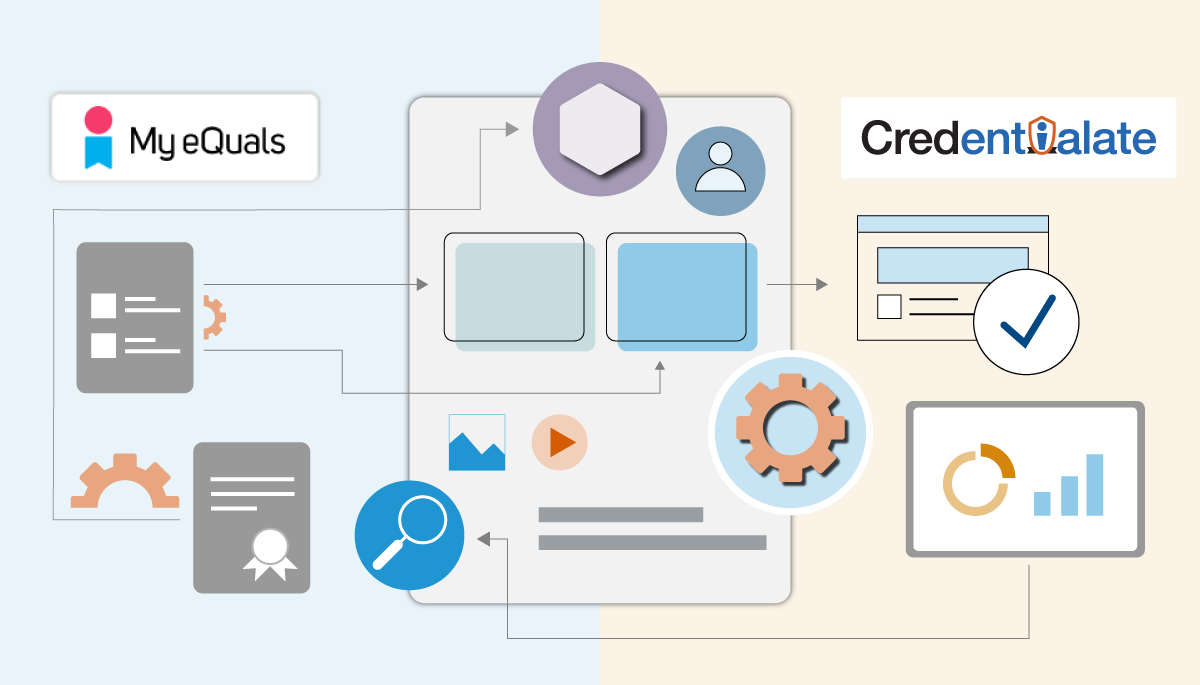
    • The Personal Evidence Record – this is Credentialate’s game-changer. Credentialate generates a dynamic, verifiable Personal Evidence Record for each credential, for each learner. This record clearly states specific skills (linked to standardised skill descriptors), assessments, and artefacts, providing irrefutable proof of achievement. This evidence link is then securely embedded within the issued badge in My eQuals.

    • Sophisticated badge creation and management – My eQuals Badges empowers you to design visually rich and data-driven digital badges. Credentialate extends those badges through seamless integration with external frameworks, including openRSD – the world’s largest open library of human- and machine-readable Rich Skill Descriptors (RSDs). RSDs provide additional context and meaning for badge recipients and viewers, to ensure each badge further articulates what a learner has accomplished and how it relates to employment and industry needs. Groups of badges can be categorised in ways that make sense to your organisation, whether that be by department or type of skills (e.g. durable skills). Categorisations help you quickly sort and find, and feed in to reporting analytics. 

    • Deep insights and reporting – gain unprecedented visibility into your badging programs with Credentialate’s robust analytics and reporting tools. Credentialate’s insights go beyond surface metrics – they reveal the rich, underlying mapping that connects learners, courses, learning outcomes, assessments, recognised skills, frameworks, and RSDs. Visual reports track badge issuance and learner attainment through score distributions (including not achieved status), achievement breakdowns, and time-based trends. They also expose how competencies align with credentials and frameworks, offering a clear view of the complex relationships that underpin each badge. This level of transparency supports rigorous program review, continuous improvement, and evidence-based decision-making across departments or the entire institution.

    • Automated and scalable workflows – automate your credentialing process. With native integration for leading LMSes, Credentialate can automatically apply your business logic to identify learners to recognise with digital badges. By securely leveraging assessment data across one or more subjects, Credentialate automates performance-based recognition, consistently and at scale.

    • Enhanced context for your learners – together, My eQuals and Credentialate provide your learners with enhanced digital badges that extend powerful portfolios of verified skills and achievements, easily shareable and understood by employers and other institutions.

    How Credentialate Works with Your My eQuals Badges

    The seamless integration between My eQuals Badges and Credentialate provides a premium extension of your credentialing capabilities. With My eQuals as the secure official recognition of credentials and microcredentials, Credentialate can assist in supplementing a further enriched badging experience:

    1. Configure My eQuals as a badge agent – within Credentialate, your administrators can easily connect your My eQuals account as a badge agent, and your LMS as a data source. This setup enables the seamless flow of information between the platforms.

    2. Design your evidence-rich credentials in Credentialate – you define the skills, frameworks, and assessment data that will underpin your digital badges. Credentialate then crafts the Personal Evidence Record that brings these achievements to life.

    3. Link to My eQuals badge configurations – when setting up a new credential for awarding in Credentialate, you’ll be able to search for and select the corresponding badge configuration that exists within your My eQuals system.

    4. Automated issuance with enhanced evidence – driven by learner activity and attainment within your LMS, Credentialate notifies My eQuals Badges to issue the credential, embedding the unique, verifiable link to the rich Personal Evidence Record generated by Credentialate.

    5. Track and analyse – use Credentialate’s dashboards to monitor the impact of your My eQuals Badges, gaining insights into learners’ skills and the effectiveness of your programs.

    This powerful combination means that when a learner views their badge in My eQuals, clicking on the associated evidence link will take them directly to their detailed Personal Evidence Record, showcasing the depth of their achievement in a way a simple badge alone cannot. All delivered via the global 1EdTech Open Badges standard, ensuring portability, security and learner agency.

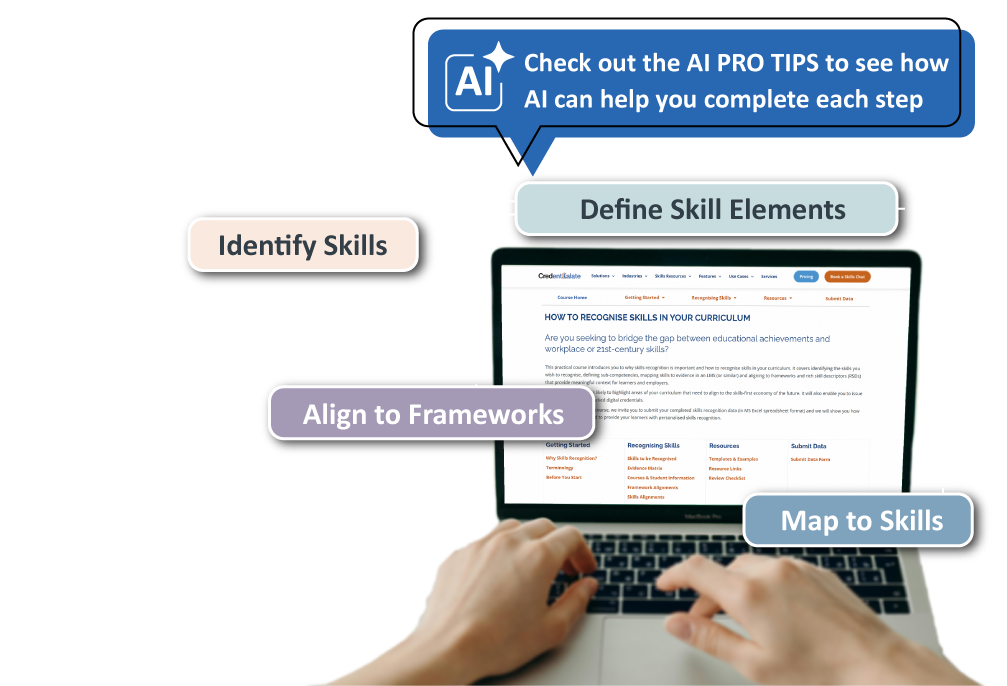
    Free Self-Paced Guide

    HOW TO RECOGNISE SKILLS IN YOUR CURRICULUM

    Access step-by-step instructions, explanations and templates. Submit your work to see how you can recognise skills in your curriculum

    The Power of the Personal Evidence Record (PER)

    The Personal Evidence Record is more than just a link; it’s the rich narrative behind every credential. It allows institutions to:

    • Showcase specific skills – detail the exact skills and competencies achieved, moving beyond generic titles.
    • Provide contextual evidence – link directly to relevant assessments, projects, or learning activities that demonstrate mastery.
    • Offer granular detail – break down complex achievements into measurable skills components, providing a comprehensive view.
    • Enhance verifiability – provide a secure, dynamic, and verifiable record that truly proves what a learner knows and can do.

    You can explore the power of our Personal Evidence Records here.

    Unlock Deeper Value for Your Digital Credentials

    We believe that providing verifiable, evidence-rich digital recognition for all forms of learning is essential in today’s rapidly evolving educational landscape. By integrating the advanced capabilities of Credentialate as the Preferred Provider for the trusted and powerful My eQuals national network solution, institutions can enrich their comprehensive credentialing ecosystem. 

    Through our partnership with HES and Parchment, an Instructure company, Credentialate is now available as a premium add-on service to My eQuals Badges. Investing in Credentialate extends your My eQuals badging capabilities, empowering you to maximise the value of the Digital Badges issued, for both your institution and your learners.

    To discuss how Credentialate can empower your institution’s digital badging initiatives, Learn More or Contact Us for a personalised consultation.

    Stay tuned for more updates as we continue to refine this powerful collaboration, bringing even greater value to institutions and their learners.

    FAQs

    • How does Credentialate enhance My eQuals Badges?

      Credentialate acts as a premium extension for My eQuals Badges, enriching them with greater skill articulation and deeper connections between education and employment. It enables features like the Personal Evidence Record, sophisticated badge design with framework integration (e.g., openRSD), advanced analytics, and automated workflows, all while My eQuals continues to provide secure official credential recognition.

    • What is the Personal Evidence Record (PER)?

      The Personal Evidence Record (PER) is Credentialate’s key innovation. It’s a dynamic, verifiable digital record generated for each credential, detailing specific skills (linked to standardised descriptors like openRSDs), assessments, and artefacts. This PER is securely embedded within the issued badge in My eQuals, providing clear, irrefutable proof of achievement for learners and employers.

    • How does Credentialate help align skills with industry needs?

      Credentialate integrates with external frameworks, including openRSD, the world’s largest open library of human- and machine-readable Rich Skill Descriptors. This integration allows institutions to align skills and competencies to industry standards, providing additional context and meaning to badges that directly addresses employment and industry needs.

    • What kind of insights can I gain from Credentialate’s reporting?

      Credentialate’s robust analytics provide unprecedented visibility into your badging programs. Reports reveal rich, underlying mappings connecting learners, courses, learning outcomes, assessments, recognised skills, and frameworks. You can track badge issuance, learner attainment (including not achieved status), achievement breakdowns, time-based trends, and how competencies align with credentials and frameworks for comprehensive program review and decision-making.

    • Is Credentialate included with My eQuals Badges?

      Credentialate is available as a premium add-on service to My eQuals Badges. Through My eQuals’ Preferred Provider relationship with Edalex, institutions using My eQuals Badges can access these extended capabilities by investing in Credentialate to maximise the value of their digital badges.

  • A Comprehensive Guide to Competency-Based Education (CBE)

    A Comprehensive Guide to Competency-Based Education (CBE)

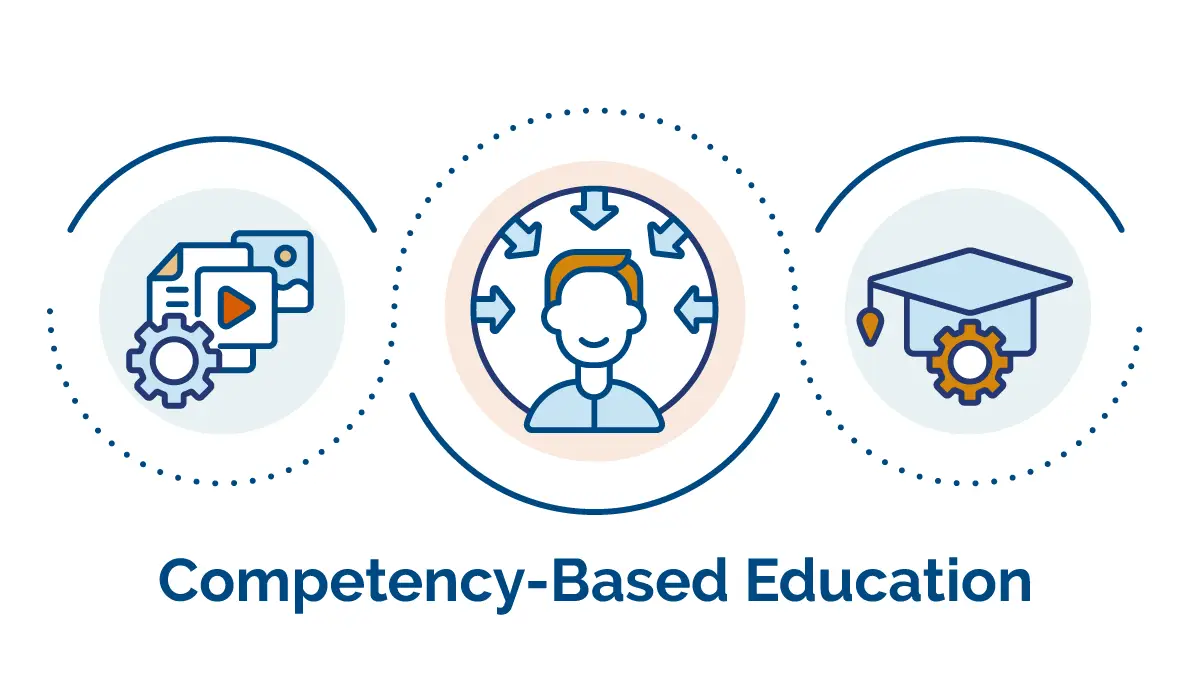
    Competency-Based Education (CBE) is reshaping the educational landscape by prioritising skill mastery over time spent in the classroom. As the demand for adaptable, work-ready graduates grows, CBE offers flexible, learner-centric pathways that prepare individuals for the modern job market. This in-depth Credentialate guide explores: What is competency-based education and how does it differ from traditional learning models? What benefits does CBE offer learners and institutions? How do employers view CBE graduates and their skill sets? What role does technology play in enabling and scaling CBE? And what does the future hold for competency-based education and lifelong learning?

    The Essentials: Competency-Based Education (CBE)

    Competency-Based Education (CBE) is a learning approach that focuses on mastering specific skills rather than spending a set amount of time in class. Unlike traditional models where all learners progress at the same pace, CBE allows individuals to move forward when they’ve demonstrated mastery. This model emphasises personalised learning, practical skill application, and flexible pacing, while traditional education prioritises seat time, standardized grading, and a one-size-fits-all curriculum.

    CBE offers learners flexible, self-paced education that accommodates diverse needs, particularly for adult and non-traditional learners. It enhances job readiness by aligning education with real-world skills employers need, reduces learning anxiety by focusing on mastery over exams, and promotes educational equity through personalised pathways. For institutions, CBE fosters improved learner engagement, supports skills-based outcomes, and enables partnerships that better connect education to workforce demands.

    Employers value CBE graduates for their proven, job-ready skills and practical experience. CBE graduates often demonstrate higher competency in specific skill areas and can immediately contribute to the workplace. Employers increasingly favor skills-based hiring, particularly in industries with talent shortages, and see CBE as a reliable pathway for sourcing qualified candidates who have already demonstrated their ability to perform essential job tasks.

    Technology is essential in scaling CBE by supporting personalised learning, flexible access, and mastery-based assessment. Online courses, project-based learning platforms, real-time data tracking, and digital portfolios empower learners to learn anytime, anywhere, and showcase their skills effectively. Technology also enables collaborative learning and provides timely feedback, which are crucial for self-directed progress in CBE models.

    The future of CBE is tied to the growing demand for lifelong learning and skills-based hiring. CBE is expected to expand as more learners seek flexible, personalised education that aligns with evolving job markets. Trends include stronger industry-education partnerships, AI-powered skills recognition, technology-driven learning environments, and blended formal and experiential learning pathways. CBE will play a key role in shaping a workforce that’s agile, adaptable, and continuously learning.

    Don’t have time to read it now?

    Enter your email below to have a PDF copy sent direct to your inbox:

    A Comprehensive Guide to Competency-Based Education (CBE)

    Competency-Based Education (CBE) is changing the way we learn. Instead of focusing on how much time we spend in a classroom, CBE emphasises mastering specific skills. This allows learners to move forward at their own speed.

    In today’s world, where continuous learning is becoming more and more essential, CBE offers a flexible and personalised educational experience that caters to the various needs of learners.

    This guide will cover:

    • What CBE is and its main principles
    • The many advantages it brings to learners and teachers
    • What employers think about the worth of CBE graduates
    • How technology plays a part in making this revolutionary learning method possible

    By exploring Competency-Based Education further, you’ll see how this system gives people the power to shape their own educational paths and equips them for success in a constantly changing job market.

    Competency-Based Education (CBE) is changing the way we learn. Instead of focusing on how much time we spend in a classroom, CBE emphasises mastering specific skills. This allows learners to move forward at their own speed.

    In today’s world, where continuous learning is becoming more and more essential, CBE offers a flexible and personalised educational experience that caters to the various needs of learners.

    This guide will cover:

    • What CBE is and its main principles
    • The many advantages it brings to learners and teachers
    • What employers think about the worth of CBE graduates
    • How technology plays a part in making this revolutionary learning method possible

    By exploring Competency-Based Education further, you’ll see how this system gives people the power to shape their own educational paths and equips them for success in a constantly changing job market.

    What is Competency-Based Education (CBE)?

    Competency-Based Education (CBE) is a transformative approach to learning that prioritises the mastery of skills rather than the amount of time spent in a classroom.

    Definition and Core Principles of CBE

    At its core, CBE emphasises the following principles:

    • Student-centered learning – this model places learners at the forefront, allowing them to take charge of their educational journey.
    • Mastery over time learners progress upon demonstrating their understanding and application of specific competencies, not merely by attending classes for set periods.

    In an ideal world, what this means is that time in the classroom does not trump the actual mastery of both principles and skills, and this assumes that learners will naturally progress at different rates throughout their learning career.

    This type of education has been popular with parents who choose to homeschool their children for years. It has since found its way into more mainstream educational thinking in large part due to the emphasis on core competencies and skills rather than grades and traditional transcripts. 

    This type of learning has several key components.

    Key Components

    Two fundamental components define CBE:

    1. Mastery-based assessment
    • Assessment focuses on learners’ ability to demonstrate knowledge and skills through practical applications.
    • Traditional grades become secondary to tangible evidence of learning, showcasing what learners can truly accomplish.
    1. Personalised learning
    • Tailored learning experiences cater to individual needs, interests, and prior knowledge.
    • Learners can opt for varied pathways, ensuring that education aligns with their unique backgrounds and aspirations.

    This type of learning means a change in focus for learners, educators, and their parents in a K-12 setting. Traditional tests and even grading systems require a new kind of thinking and approach.

    Personalised Learning

    Empowering Learners through Control

    CBE empowers learners by granting them control over their educational pace. This flexibility means that:

    • Adult learners can balance studies with work and personal responsibilities.
    • Learners advance only when they are ready, reducing anxiety and fostering a deeper understanding of material.
    • Learners who master studies quickly can move on, preventing boredom and stagnation in their learning. 

    The shift from traditional education towards CBE creates an environment where mastery reigns supreme. Each learner’s journey becomes distinct, reflecting their strengths and areas for growth. When learners are given the reins to navigate their own learning paths, engagement deepens, resulting in a more meaningful educational experience.

    CBE represents an evolution in how we think about education – one that aligns closely with the demands of today’s workforce while embracing the diverse needs of learners.

    CBE vs Traditional Learning Models

    Competency-Based Education (CBE) offers a distinct alternative to traditional learning models, which typically rely on a time-based structure. In traditional education, learners move through a curriculum based on the academic calendar, often irrespective of their individual mastery of the material. This system emphasises seat time, where learners are required to spend a specified amount of time in class regardless of their understanding or skill level.

    Instead, a CBE based approach has some key differences. 

    1. Pacing and progression
    • CBE allows learners to progress at their own pace. Learners advance only upon demonstrating mastery of specific competencies.
    • Traditional models often dictate that all learners complete the same tasks within set timelines, which can lead to disengagement for those who either struggle or excel.
    1. Student engagement
    • Engagement levels differ significantly between the two approaches. CBE fosters active participation by allowing learners to take control of their learning journey.
    • In contrast, the one-size-fits-all nature of traditional education can leave many learners feeling disinterested or pressured, as they may be forced to learn at a pace that doesn’t suit their needs.
    1. Academic standards
    • Both models uphold academic standards but approach them differently. Traditional education adheres to standard curricula that focus on content delivery.
    • CBE centers around competency benchmarks. Here, standards are tied directly to skill mastery rather than just course completion.

    But what do these key differences mean when it comes to learner outcomes?

    Learner Outcomes

    Research indicates that CBE can lead to improved outcomes, particularly for adult learners and non-traditional learners. By prioritising practical skills and real-world applications, CBE equips learners with knowledge that is relevant and immediately applicable in the workforce. The flexibility inherent in this model supports diverse learning styles and schedules, enhancing overall educational experiences.

    The shift towards CBE represents a significant evolution in how we perceive education and success within it. As institutions increasingly embrace this model, they set the stage for more personalised and effective educational pathways.

    But when it comes right down to it, what are the benefits of CBE programs?

    Benefits of CBE Programs

    Competency-Based Education (CBE) offers a multitude of advantages that cater to the evolving needs of today’s learners. Here are some key benefits of CBE programs:

    1. Enhanced job readiness – CBE programs emphasise targeted skill development aligned with industry demands. Learners engage in practical learning experiences which equip them with competencies that employers seek. This direct connection between education and job readiness prepares graduates to step confidently into the workforce knowing exactly what skills they bring to the table.

    CBE benefits for todays learners

    2. Flexibility for adult learners many adult learners juggle work, family, and other commitments. CBE provides a framework where they can progress at their own pace. This flexibility allows non-traditional learners to balance their educational pursuits with personal and professional responsibilities, making education more accessible.

    3. Skills assessments as mastery measures traditional assessments often rely on standardised testing methods. In contrast, CBE focuses on skills assessments that genuinely reflect a learner’s knowledge mastery. By demonstrating their abilities through projects and real-world applications, learners can showcase their understanding in ways that standardised tests cannot capture.

    In addition, learners who struggle to test well on traditional exams find CBE a refreshing way to showcase learning without the anxiety and even inability to test in a standardised environment.

    4. Equity in education – one of the standout features of CBE is its commitment to equity. By designing programs that ensure access for all learners, regardless of background or prior experience, CBE addresses systemic barriers that have historically hindered educational success. Personalised learning pathways cater to diverse needs and backgrounds, fostering an inclusive environment.

    The benefits of CBE programs extend beyond individual gain; they contribute to a more skilled workforce ready to meet contemporary challenges. Institutions adopting this model not only empower learners but also align their offerings with the dynamic demands of the job market. With these advantages, it’s clear why many are exploring this innovative approach to education.

    Employer Perspectives on Competency-Based Education

    Insights from employers reveal a growing appreciation for graduates from competency-based education (CBE) programs. These graduates often demonstrate a mastery of skills that aligns well with job requirements, making them more attractive candidates in the competitive job market. Employers value the following aspects of CBE:

    • Skill proficiency – CBE focuses on the demonstration of competencies rather than time spent in class. This means that graduates enter the workforce equipped with specific skills tailored to industry needs. Employers report higher satisfaction with employees who can hit the ground running due to their practical knowledge than those who just come in armed with the “right” degree or certification.
    Employer Perspectives on Competency-Based Education
    • Skills-based hiring trends – the shift towards skills-based hiring has gained traction, especially in industries facing talent shortages and the tech industry in particular. Employers prioritise candidates who possess demonstrable skills over traditional credentials. This approach opens doors for CBE graduates, as they are often assessed based on their ability to perform tasks relevant to the role rather than solely their educational background.

    • Addressing talent shortages – many sectors struggle to find qualified candidates. Competency-focused training programs provide a direct solution by equipping learners with in-demand skills in real time. Organisations are increasingly partnering with educational institutions to develop curricula that meet specific workforce requirements, ensuring graduates emerge with the capabilities needed for immediate employment.

    Employer perspectives on competency-based education highlight its relevance in today’s job market. As organisations seek skilled workers capable of navigating complex challenges, CBE offers a pathway for graduates to demonstrate their readiness and adaptability. This alignment between education and employment not only benefits learners but also contributes positively to addressing broader workforce demands.

    How Technology Helps Make Competency-Based Education Possible

    Technology plays a crucial role in changing traditional education systems into flexible, competency-based models. By using technology in education, schools and universities can offer customised learning experiences that meet the unique needs of each learner. But how?

    1. Online courses

    These platforms allow learners to access a wealth of resources anytime, anywhere. This flexibility is crucial for adult learners balancing work and education. Learners can revisit materials, engage with interactive content, and participate in discussions at their convenience.

    These platforms have also proven effective for K-12 learners who face social anxiety, peer pressure, or who struggle with traditional school environments in other ways. They provide support for parents who would not otherwise be able to homeschool their children due to their own education level or skills. 

    How Technology Helps Make Competency-Based Education Possible

    Online courses are not just learners watching classroom videos at home. Instead, they offer alternative learning paths and environments that increase the likelihood of better learner outcomes.

    2. Project-based learning

    Technology enables the implementation of project-based assessments where learners can demonstrate their competencies through real-world applications. Tools like collaboration software and digital portfolios help learners showcase their projects, reflecting their mastery of skills effectively

    3. Data tracking and feedback

    Educational technologies support continuous assessment by collecting data on learner progress. Educators can identify areas where learners excel or need assistance, ensuring timely interventions. This real-time feedback loop empowers learners to take charge of their learning journey.

    With the right technological tools, competency-based education encourages collaboration among learners. Online discussion forums and group projects motivate learners to exchange ideas and gain knowledge from one another. This not only enhances comprehension but also equips them for cooperative work in professional environments.

    As educational institutions increasingly adopt technology, the combination of innovative tools and competency-based education leads to improved learning outcomes, making education more accessible and effective for all learners.

    Case Studies: Successful Implementations of Competency-Based Education

    Examining successful implementations of Competency-Based Education (CBE) provides valuable insights into innovative teaching methods that engage learners and enhance their educational experiences. Here are a few noteworthy examples:

    1. Western Governors University (WGU)

    This fully online university is a pioneer in CBE. WGU allows learners to progress through courses based on mastery of skills rather than time spent in class. The use of real-world projects and assessments tailored to individual competencies fosters a personalised learning environment.

    2. University of Wisconsin System

    The UW Flexible Option program offers a unique blend of online courses and competency-based assessments. This model emphasises self-paced learning, enabling learners to complete modules as they demonstrate proficiency. The integration of digital portfolios allows learners to showcase their skills to potential employers effectively.

    3. Southern New Hampshire University (SNHU)

    SNHU has embraced CBE through its College for America initiative. Learners engage in project-based evaluations that require them to tackle real-world challenges, developing essential job skills in the process. This approach not only enhances learner engagement but also aligns educational outcomes with employer expectations.

    SNHU also provides great programs for those in the US military, even those serving abroad, helping them earn their college degrees while they are still wearing the uniform. This provides employers with veterans who are job-ready once they are discharged. 

    These case studies illustrate how educational institutions can successfully implement CBE by utilising innovative teaching methods. By focusing on mastery, personalised learning, and practical applications, learners are empowered and prepared for success in the modern workforce.

    Challenges and Considerations for Implementing Competency-Based Education Models

    This transition is not easy, however. Moving to a competency-based education (CBE) model presents several challenges for institutions. Understanding these obstacles is crucial for successful education transformation efforts.

    • Cultural shift – moving from traditional teaching methods to CBE requires a significant cultural change within educational institutions. Faculty and staff must embrace new pedagogical approaches, which can meet resistance.
    • Resource allocation – implementing CBE demands investments in technology, training, and curriculum development. Limited resources may hinder progress and sustainability.
    • Assessment design – developing effective mastery-based assessments poses a challenge. Institutions must create evaluations that accurately measure learner competencies without relying on conventional testing methods.
    • Learner support services – CBE emphasises personalised learning. Institutions need to enhance support services, ensuring learners receive tailored guidance throughout their learning journey.

    Each of these challenges involves serious reform and often a significant financial commitment to change. But there are strategies for overcoming them.

    Strategies for Overcoming Obstacles

    To navigate the complexities of implementing CBE models, consider these strategies:

    • Professional development – offer ongoing training for educators to familiarise them with CBE principles and innovative teaching methods.
    • Collaboration and communication – foster open dialogue among faculty, administration, and learners to address concerns and share best practices.
    • Pilot programs – begin with small-scale pilot initiatives to test CBE approaches before full implementation. This allows for adjustments based on feedback and outcomes.
    • Leverage technology use digital tools that facilitate personalised learning experiences and mastery assessments, helping streamline the transition process.

    By addressing these challenges head-on, institutions can effectively implement competency-based education models, paving the way for enhanced learning experiences tailored to individual learner needs.

    Future Trends in Competency-Based Education and Lifelong Learning Opportunities

    The landscape of education is shifting, with competency-based education (CBE) leading the way toward a more personalised and relevant learning experience. Predictions indicate that CBE will continue to grow as a popular approach to lifelong learning, catering to diverse learner needs while addressing gaps in traditional educational systems.

    • Increased demand for high-demand skills – employers are actively seeking candidates equipped with specific competencies rather than mere degrees. CBE aligns well with this demand, allowing learners to focus on acquiring skills that are directly applicable in the workforce.
    • Integration of technology – as technology evolves, so too does its role in facilitating CBE. Online platforms, simulations, and interactive projects will enhance how learners develop competencies, providing real-time feedback and supporting self-directed learning.
    • Flexible learning pathways – the future promises even greater flexibility in educational pathways. Learners can blend formal education with experiential learning opportunities – internships, volunteer work, or projects – that reinforce their skill sets while advancing their careers.
    • Collaborative partnerships – educational institutions are likely to strengthen partnerships with industries to ensure curriculum relevance. This collaboration will help educators remain attuned to labor market trends and emerging high-demand skills.
    Future Trends in Competency-Based Education and Lifelong Learning Opportunities
    • AI powered skills recognition – new artificial intelligence (AI) powered tools, such as SkillsAware, can help educators establish a baseline of learner’s skills – where they are now, so they can plan a personalised learning journey.

    Embracing these trends positions CBE as a vital player in fostering lifelong learning and equipping individuals with the tools necessary for success in an ever-evolving job market. As we look ahead, the connection between CBE and workforce readiness becomes increasingly evident.

    Embracing Competency-Based Education for a Brighter Future

    Competency-Based Education (CBE) has the potential to transform the learning experience for both learners and educational institutions. Unlike traditional methods that prioritise time spent in a classroom, CBE focuses on mastering skills. This empowers learners to take control of their own education.

    CBE offers several advantages, including:

    • Personalised learning experiences that adapt to individual pace and prior knowledge
    • Increased engagement through project-based evaluations that mirror real-world applications
    • Alignment with workforce demands, addressing talent shortages with a skilled workforce

    By prioritising skill development tailored to specific job requirements, CBE enhances employability and ensures fairness by accommodating diverse learner needs.

    The future looks promising for CBE as it has the potential to reshape educational practices and workforce readiness initiatives. This approach creates a system that is responsive, flexible, and focused on lifelong learning. By embracing CBE, we can pave the way for a more dynamic and inclusive educational landscape.

    Want a copy? Email it for later

    Enter your email below to have a PDF copy sent direct to your inbox:

  • Skills Imperative – Part 2: Are You Missing Out on Big Opportunities?

    Skills Imperative – Part 2: Are You Missing Out on Big Opportunities?

    Key takeaways:

    • Evidence-backed skills recognition is a catalyst for growth across all learner segments – by validating skills, institutions can enhance retention of current learners, attract the expanding lifelong learning market, and tap into global opportunities through transnational education.
    • Focusing on skills creates value and expands reach – demonstrating tangible skills increases the perceived value of education for domestic learners, provides relevant pathways for lifelong learners, and positions Australian institutions to meet international demands for skills-based credentials.
    • Credentialate and SkillsAware offer comprehensive solutions for diverse learner needs – these platforms provide the tools to implement skills recognition effectively for current students, facilitate RPL for lifelong learners, and deliver and showcase Australian skills credentials to a global audience.

    In ‘Part 1: Are You Risking Irrelevance?‘, we laid bare the mounting risks for Higher Education institutions that hesitate to embrace evidence-backed skills recognition. The cost of inaction is significant, but the converse holds even greater promise. Part 2 shifts our focus to the compelling rewards that await those institutions who bridge the gap between learning and earning. Beyond mitigating risks, embracing a system that validates and showcases learner skills unlocks new opportunities for growth, relevance, and a stronger connection with both learners and the workforce. 

    Let’s explore these benefits and introduce practical pathways to making evidence-backed skills recognition a reality for your institution.

    Fuel Retention: How Skills Recognition Empowers Current Learners

    In an era where the perceived value of a traditional degree is under scrutiny, and learners are increasingly seeking tangible outcomes from their education, evidence-backed skills recognition offers a powerful antidote to declining retention rates.

    Consider the perspective of today’s learners. Faced with rising tuition costs and anxieties about future employment, they crave clarity and demonstrable value. Traditional letter grades and generic course titles often fail to provide this. However, when learners can see the specific, in-demand skills they are acquiring – skills that are validated by evidence and recognised by employers – their engagement and motivation soar. 

    This tangible understanding of their progress and the real-world applicability of their learning makes them more likely to persist in their learning. Skills recognition provides more than just a transcript; it offers a roadmap of their developing competencies, fostering a sense of accomplishment and purpose that traditional grading systems often lack. Better learner outcomes and retention are intrinsically linked to making the learning process and its tangible results more transparent and meaningful.

    Untapped Potential: Skills Recognition and the Return of Lifelong Learners

    Furthermore, the focus on skills opens up a significant opportunity to re-engage lifelong learners. These individuals, whether seeking to upskill for career advancement, transition to a new field, or simply pursue personal growth, are often drawn to learning experiences that are flexible, relevant, and provide clear evidence of their acquired competencies. A university that offers evidence-backed skills recognition is uniquely positioned to attract this demographic. Why?

    • Increased enrolment – by offering pathways to acquire specific, validated skills, institutions can tap into a vast pool of individuals who may not be seeking a full degree but are eager for targeted learning opportunities. This directly translates to increased enrolment numbers and new revenue streams.
    • Reduced barriers – facilitating Recognition of Prior Learning (RPL) allows institutions to attract a wider pool of lifelong learners by acknowledging their existing skills and experience, making further education more accessible and appealing to individuals who might otherwise be deterred by the need to repeat learning or gain formal qualifications.
    • Enhanced community engagement and economic development – lifelong learners are often active members of their communities. By providing them with relevant skills, universities contribute to local economic development by equipping individuals with the competencies needed by regional employers. Moreover, these learners may become valuable connectors between the institution and the wider community.
    • Stronger networking and industry partnerships – lifelong learners often have established professional networks. Their engagement with the university can lead to valuable partnerships and collaborations with industry, creating opportunities for internships, guest lectures, and curriculum development that aligns with real-world needs.

    In essence, by embracing evidence-backed skills recognition, higher education institutions can move beyond the traditional degree-centric model and position themselves as lifelong learning partners. This not only addresses the critical issue of learner retention but also unlocks the immense potential of the lifelong learning market, creating a more resilient, relevant, and impactful future for the institution.

    New Markets: Transnational Education and the Global Demand for Australian Skills

    Australian Higher Education is increasingly recognised globally for the quality of its education and the employability of its graduates. This strong international reputation creates significant opportunities for Australian institutions to expand their reach through transnational education (TNE), offering skills-based credentials to learners residing outside of Australia. This approach not only diversifies revenue streams for universities but also positions them as key players in addressing global skills gaps and fostering international collaboration.

    The demand for flexible and career-focused education options is rising worldwide, and skills-based credentials delivered online or through offshore partnerships can be particularly attractive to international students. These learners often seek qualifications that are directly applicable to the workforce in their home countries or that provide pathways to global career opportunities. By offering targeted micro-credentials, professional development courses, and even full degree programs with a clear skills focus, Australian universities can tap into this significant international market.

    Furthermore, the Australian Qualifications Framework (AQF) provides a recognised standard that can lend credibility to skills-based credentials offered transnationally. Ensuring that TNE programs align with AQF standards and meet rigorous quality assurance measures is crucial for maintaining Australia’s international reputation in education. By strategically leveraging online learning platforms and developing partnerships with institutions and employers overseas, Australian universities can deliver high-quality skills-based education that meets the needs of a global learner base and strengthens Australia’s position as a leader in international education.

    Free Self-Paced Guide

    HOW TO RECOGNISE SKILLS IN YOUR CURRICULUM

    Access step-by-step instructions, explanations and templates. Submit your work to see how you can recognise skills in your curriculum

    The Skills-Change Wave is Cresting: Is Your Institution Ready?

    The evidence is clear: the future of higher education hinges on embracing evidence-backed skills recognition. Institutions that proactively adapt will not only mitigate the risks of declining enrolments and reputational damage but will also unlock significant opportunities in the burgeoning lifelong learning market and beyond.

    As the research indicates (e.g., Prior Learning Ireland and insights from HE Professional), validating prior learning, offering flexible and skills-focused programs, and providing clear recognition of acquired skills are key to attracting and retaining lifelong learners. This demographic seeks education that is relevant, accessible, and directly applicable to their career goals. They want to see a clear return on their investment of time and resources.

    This is where Credentialate and SkillsAware come in.

    • Credentialate – provides the essential infrastructure for institutions to implement robust evidence-backed skills recognition. It streamlines the process of mapping curriculum to skills, capturing learner evidence, and issuing verifiable credentials. By automating the time-consuming aspects of skills recognition, Credentialate frees up faculty and staff to focus on the crucial human elements: defining relevant skills, designing effective assessments, and ensuring alignment with industry needs. Credentialate empowers institutions to clearly articulate the skills their graduates possess, making their programs more attractive to both traditional learners and lifelong learners. (Read our use case about scale and sustainability through automation)
    • SkillsAware – offers a human-centred, AI-powered service that empowers learners to build a comprehensive skills credential by showcasing validated evidence of their competencies. Unlike traditional CVs or qualifications, SkillsAware leverages AI to analyse and contextualise a learner’s experience and education, mapping it against established frameworks and providing a granular view of their skills. This comprehensive digital record facilitates a more effective transition from education to employment by providing employers with a clear, evidence-backed understanding of a candidate’s capabilities. For lifelong learners, SkillsAware acts as a dynamic portfolio, enabling them to continuously showcase their evolving skills and connect with opportunities that truly match their validated competencies.

    Together, Credentialate and SkillsAware offer a comprehensive solution for institutions seeking to thrive in the skills-based economy. They enable institutions to:

    • Attract and retain a broader range of learners – by offering clear pathways to acquire and demonstrate valuable skills, institutions can appeal to both traditional learners and the growing market of lifelong learners seeking career advancement.
    • Enhance the value proposition of their programs – skills-based credentials, such as Personal Evidence Records, provide a tangible and verifiable demonstration of graduate competencies, making programs more attractive to prospective learners and employers alike.
    • Forge stronger connections with industry – by aligning curriculum with industry-recognised skills, institutions can ensure their programs remain relevant and prepare graduates for success in the workforce.
    • Become leaders in the future of education – embracing skills recognition positions institutions at the forefront of a transformative shift in higher education, enhancing their reputation and attracting forward-thinking learners and faculty.

    The skills-change wave is indeed cresting. The question is not if institutions need to adapt, but how quickly. By embracing evidence-backed skills recognition and leveraging the power of platforms like Credentialate and SkillsAware, institutions can not only weather the storm but also position themselves for long-term success in a rapidly evolving educational landscape.

    Ready to take the first step and ensure your institution isn’t left behind? Contact us here. We’d love to give you a demo of what we can do for you, and help you figure out your path from today into the future of education.

    FAQs

    • How does evidence-backed skills recognition benefit current students, lifelong learners, and international students?
      It increases engagement and career readiness for current students, provides accessible pathways through RPL for lifelong learners, and offers globally recognised and relevant credentials for international students through transnational education.
    • What is the role of skills recognition in attracting a more diverse student body, including lifelong and transnational learners?
      By validating prior learning and offering flexible, skills-focused programs online and offshore, institutions can break down barriers and appeal to a wider range of learners seeking specific career outcomes.
    • How can Credentialate and SkillsAware support a university’s domestic and international growth strategies?
      Credentialate provides the infrastructure for effective skills recognition for all learners, while SkillsAware helps both domestic and international learners showcase their skills to employers, enhancing employability and attracting future students.
    • What are some initial steps for universities to implement skills recognition for their diverse learner populations?
      Universities can begin by assessing their curriculum for skill alignment, exploring RPL processes to attract lifelong learners, and investigating online delivery models and partnerships to engage the transnational education market, supported by platforms like Credentialate.
  • Skills Imperative – Part 1: Are You Risking Irrelevance?

    Skills Imperative – Part 1: Are You Risking Irrelevance?

    Key takeaways:

    • Ignoring the employability imperative carries significant risks – Higher Education institutions face declining enrolments, reputational damage, and missed opportunities in key growth markets by failing to demonstrably connect learning to employment through skills recognition.
    • The perceived value of a traditional degree is eroding – learners are increasingly questioning the return on investment of traditional degrees and are drawn to more direct, skills-focused educational alternatives.
    • AI alone is not the solution for effective skills recognition – while AI can offer assistance, the fundamental and crucial work of defining, identifying, and aligning skills requires human expertise and contextual understanding.

    Is your university risking irrelevance in the rapidly evolving landscape of education and employment? The pressure to connect learning with earning is undeniable, yet resistance persists. In Part 1 of our deep dive, we uncover the critical risks that Higher Education institutions face by delaying the adoption of evidence-backed skills recognition. The price of standing still is higher than you think.

    The fundamental purpose of higher education is increasingly viewed through the lens of employability. As Malcolm Tight from the Department of Educational Research, at Lancaster University in the UK notes, this perspective has been widely adopted by governments and institutions globally. Yet, this very emphasis has drawn criticism and reluctance from within academia. The reluctance stems from a complex interplay of deeply held values about the purpose of higher education, established institutional structures and cultures, concerns about the quality and nature of change, and practical challenges related to implementation. While the pressure to address employability is growing, these underlying factors contribute to a significant degree of inertia within academia.

    How do we reconcile this tension? And what are the risks of doing nothing or doubling down on the status-quo? The answer lies in evidence-backed skills recognition.

    Recognising the tangible employability skills gained through education is no longer a peripheral benefit; it’s becoming the central mechanism for driving better employment outcomes and fostering learner agency. For higher education institutions, demonstrating the real-world value of their offerings – justifying the cost and time investment to increasingly sceptical learners – hinges on their ability to articulate and validate graduate skills through skills recognition.

    While the initial implementation of evidence-backed skills recognition requires dedicated effort, the long-term rewards far outweigh the upfront investment. The alternative – clinging to outdated models of recognition – carries significant and growing risks to university enrolments and relevance in the future of higher education.

    The Gathering Storm: Ignoring Skills Recognition Is a Recipe for Institutional Decline

    The numbers don’t lie. The dip in Australian bachelor degree enrolments – a loss of 119,000 learners and a staggering $9.2 million in potential revenue since 2016 – isn’t an anomaly; it’s a symptom. It’s the market delivering a blunt message: the value of a degree is being questioned, and institutions that fail to adapt risk being left adrift in a sea of evolving expectations.

    Melbourne University’s October 2023 Taking the Pulse of the Nation report throws this into sharp relief. Sky-high tuition fees are a major deterrent, but equally concerning is the growing doubt among young Australians that a university degree guarantees a better job. Coupled with a reluctance to shoulder learner loan burdens, this paints a clear picture: the perceived value equation of traditional higher education is fracturing.

    Into this void, steps alternative education models – micro-credentials, industry-led training, and a plethora of other learning experiences focused on career readiness. These alternatives aren’t just niche offerings; they are gaining traction precisely because they often promise a more direct pathway to tangible skills and employment. The demand for personalised, flexible, and demonstrably relevant learning experiences is not a fad; it’s a fundamental shift in learner preference.

    Universities that bury their heads in the sand, clinging to outdated notions of academic prestige without clearly articulating the employability skills their graduates possess, are actively courting irrelevance. The consequences of a lack of skills recognition are multi-fold:

    • Enrolment erosion – the decline we’re already witnessing will accelerate. Why would learners invest significant time and money in a degree if they can’t clearly see the skills they’ll acquire and how those skills translate into career opportunities? The allure of shorter, more targeted programs with explicit skill outcomes will only intensify.

    • Reputational damage – in a world where transparency and accountability are increasingly valued, institutions that fail to demonstrate the practical skills their graduates possess will suffer reputational damage. Employers will look elsewhere for candidates with verifiable competencies, and prospective learners will be wary of investing in programs with unclear outcomes.

    • Missed opportunities in the lifelong learning and transnational markets – as mentioned earlier, the burgeoning markets of lifelong learners seeking upskilling and reskilling, and international learners seeking flexible online education, represent significant growth potential. However, these learners are often highly focused on acquiring specific, demonstrable skills. Institutions that can’t clearly articulate and validate these skills will be locked out of these lucrative markets.

    • Internal inefficiencies and curriculum lag – without a clear framework for skills recognition, curriculum development and assessment can become disconnected from the needs of the job market. This can lead to graduates lacking the specific skills employers demand, further eroding the institution’s reputation and the value of its qualifications.

    • Increased scrutiny and potential funding cuts – as governments and funding bodies increasingly focus on graduate outcomes and the alignment of education with economic needs, institutions that can’t demonstrate their contribution to workforce development and closing the skills gap through clear skills recognition may face increased scrutiny and funding reductions.

    Ignoring the imperative for evidence-backed skills recognition isn’t a neutral stance; it’s an active choice to embrace risk – a risk that threatens the very sustainability and relevance of higher education institutions in the 21st century. The storm clouds are gathering, and only those who adapt will weather it.

    The Myth of the AI Silver Bullet: Why Human Intelligence Remains the Cornerstone of Skills Recognition

    The siren song of artificial intelligence (AI) often promises effortless solutions and the swift automation of complex tasks. In the realm of higher education, particularly concerning the intricate process of skills recognition, the allure of an AI “silver bullet” is strong. The narrative suggests that algorithms can seamlessly analyse curricula, identify embedded skills, and generate comprehensive learner evidence records with minimal human intervention. This, however, is a dangerous oversimplification.

    While AI and Large Language Models (LLMs) undoubtedly possess powerful analytical capabilities, they fundamentally lack the nuanced understanding, contextual awareness, and critical thinking that are indispensable for effective skills recognition. Software excels at processing data after the crucial groundwork has been laid. It is a powerful tool for automation and efficiency in the later stages, but it cannot replace the essential human intelligence required at the outset.

    Consider the foundational task of defining your skills. This isn’t a purely data-driven exercise. It demands a deep understanding of the institution’s mission, pedagogical philosophy, the evolving demands of the job market, and the anticipated needs of future learner cohorts. This “big picture” thinking – the very why behind what you choose to credential – is inherently human. While AI can potentially assist by analysing existing frameworks or identifying keywords in course materials, it cannot make the critical judgments about what skills truly matter and how they should be articulated within your specific context.

    Similarly, the crucial step of determining whether a course genuinely teaches and assesses a specific skill requires pedagogical expertise and a nuanced understanding of assessment design. An AI might identify keywords linking a learning outcome to a particular skill, but it cannot discern the depth of instruction, the rigor of the assessment, or whether the assessment truly measures the intended skill. This requires human educators to critically evaluate their course materials and assessment methods.

    The process of creating an evidence matrix and aligning skills to frameworks also underscores the limitations of a purely automated approach. While AI can certainly assist in drafting rubrics or mapping to existing frameworks, ensuring the appropriateness and coherence of these alignments requires human oversight and expert judgment. Aligning to complex frameworks, especially those with numerous interconnected elements, demands thoughtful consideration to ensure meaningful and accurate connections.

    Even in seemingly straightforward tasks like aligning to standardised skill definitions, the human element remains vital. While integration with openRSD streamlines the process, the initial selection of the most relevant and appropriate skill definitions requires human discernment and an understanding of the specific context of your programs. AI cannot independently navigate the nuances of different skill libraries and make these crucial connections.

    The initial stages of evidence-backed skills recognition are inherently manual and require human investment. AI can be a valuable assistant, accelerating certain processes and automating repetitive tasks in the later stages, such as populating badge agents and building credentials based on pre-defined parameters. However, it cannot replace the fundamental human work of defining, identifying, aligning, and validating the skills themselves.

    Therefore, the notion that AI offers a “silver bullet” solution for skills recognition is a fallacy. Institutions that rely solely on automated solutions risk creating a system that lacks the necessary rigor, relevance, and pedagogical grounding. The path to effective evidence-backed skills recognition requires a strategic partnership between human expertise and technological capabilities, with human intelligence firmly at the helm. It is a non-negotiable foundation for building a robust and credible system that will yield substantial and sustainable long-term benefits.

    The risks of inaction are clear. Higher Education institutions that fail to adapt to the skills-based economy face significant challenges to their relevance and sustainability. But this is only half the story. Join us in ‘Part 2: Are You Missing Out on Big Opportunities?‘  as we explore the compelling rewards of embracing evidence-backed skills recognition and how it can pave the way for a brighter future for your institution.

    Free Self-Paced Guide

    HOW TO RECOGNISE SKILLS IN YOUR CURRICULUM

    Access step-by-step instructions, explanations and templates. Submit your work to see how you can recognise skills in your curriculum

    FAQs

    • What are the main risks for universities that don’t prioritise skills recognition?
      The primary risks include declining student enrolments, damage to institutional reputation among learners and employers, and missing out on the growing markets of lifelong and transnational learners.
    • Why can’t universities just rely on AI to solve their skills recognition challenges?
      While AI can be a helpful tool, it lacks the human expertise needed for the critical initial steps of defining, identifying, and aligning skills within a curriculum. Over-reliance on AI risks a superficial and ineffective approach.
    • How is the changing perception of higher education impacting university enrolments?Learners are increasingly questioning the direct link between a traditional degree and career success, making institutions that cannot clearly demonstrate graduate employability skills less attractive compared to more skills-focused alternatives.
  • Edalex announces Canadian partnership with Learning Agents, expanding global reach

    Edalex announces Canadian partnership with Learning Agents, expanding global reach

    Edalex, an EdTech company connecting learning, skills and evidence, today announced an exciting new partnership with Learning Agents, a Canadian company led by the respected Don Presant. This collaboration marks a significant step in Edalex’s expansion into the Canadian market and further strengthens the global reach of its Credentialate, openRSD platforms and their SkillsAware service.
    (more…)

  • Edalex webinar addresses the skills emergency with expert panel exploring how Community Colleges can respond using tech

    Edalex webinar addresses the skills emergency with expert panel exploring how Community Colleges can respond using tech

    Edalex, a software development company that connects learning, skills, and evidence, recently hosted an engaging cross-sector webinar, “Skills Emergency: How Community Colleges Can Respond Leveraging Tech.” Moderated by Dan McFadyen, Managing Director of Edalex, the session explored the crucial role of community colleges in addressing the growing skills gap and how technology can empower them in this mission.
    (more…)