
Navigating AI’s Impact on Education, Workforce, and the Future of Skills Recognition
In this interview, Dan McFadyen and Ray Fleming dive into the future of AI in education and the workforce. They discuss why human skills like critical thinking are more vital than ever, the transition from degrees to skill-based credentials, and how organisations can move from simple productivity to transformative business models while prioritising human connection.
Skills for the Frontline: How Skills Visibility Addresses Equity
Frontline workers build immense expertise on the job, yet their skills often remain invisible to employers. This recognition gap is a fundamental equity issue. Community colleges are bridging this gap by replacing manual silos with AI-powered skills recognition. Using SkillsAware to surface and validate hidden competencies through conversational AI and Credentialate to issue evidence-backed Personal Evidence Records (PERs), institutions can turn “invisible experience” into verifiable, portable assets. This accelerates economic mobility and ensures opportunity is based on what a worker can actually do.
Bridging the Gap: Industry Partnerships and Real-World Relevance in the Skills Economy

The most powerful workforce programs are now in Community Colleges, built through deep industry co-creation that embeds hands-on labs and apprenticeships. This collaboration directly aligns learning with employment and high wages. The challenge is proving skill mastery. Edalex’s Credentialate and SkillsAware create a skills transparency ecosystem, turning co-designed programs into verified, shareable Personal Evidence Records that employers trust, accelerating real-world results and local economic growth.
Community Colleges: America’s Indispensable Engine of the Skills-First Economy

Community Colleges are America’s indispensable workforce engine, rapidly filling the massive demand for middle-skill workers. In a skills-first economy, the challenge is making acquired competencies visible to employers. Edalex solves this by combining SkillsAware (AI-powered recognition and standards alignment) with Credentialate (verified, personalized digital credentials). This technological solution empowers Community Colleges to provide employers with trusted skills data, accelerating economic mobility and cementing the Community College advantage.
Skills Over Degrees: How Community Colleges Are Forging the New Currency of Opportunity

The world of work is shifting: skills are the new currency, replacing the traditional reliance on degrees. Community Colleges are leading this transformation, becoming flexible career launchpads that address the massive middle-skills gap. To succeed, institutions must make skills visible and portable. Edalex’s Credentialate and SkillsAware platforms help colleges align programs with industry needs, delivering rich Personal Evidence Records that give graduates an employer-friendly way to prove their value in the skills-first economy.
From Badges to Trust: The Future of Learning and Unlocking Potential with Open Recognition

In this interview, Dan McFadyen and Don Presant discuss open recognition, evolving from digital badges to broader trust systems. Don highlights open recognition’s importance in validating learning, performance, and community involvement. He explains how it encapsulates stories in badges, unlocking opportunities in careers and learning. They delve into how Learning Agents assists organisations in deploying digital credentials, helping to overcome challenges by providing flexible recognition frameworks. The conversation also touches on the difficulty of assessing “durable skills” and the potential of platforms like SkillsAware to assist individuals in articulating their capabilities.
A Comprehensive Guide to Competency-Based Education (CBE)
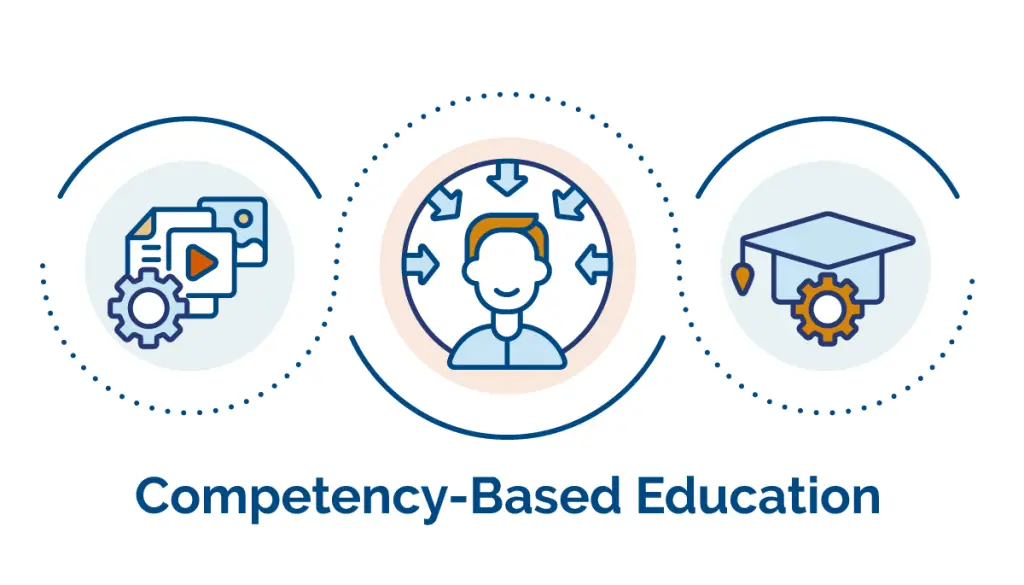
Competency-Based Education (CBE) is reshaping the educational landscape by prioritising skill mastery over time spent in the classroom. As the demand for adaptable, work-ready graduates grows, CBE offers flexible, learner-centric pathways that prepare individuals for the modern job market. This in-depth Credentialate guide explores: What is competency-based education and how does it differ from traditional learning models? What benefits does CBE offer learners and institutions? How do employers view CBE graduates and their skill sets? What role does technology play in enabling and scaling CBE? And what does the future hold for competency-based education and lifelong learning?
Edalex announces Canadian partnership with Learning Agents, expanding global reach
Edalex’s new partnership with Learning Agents, a Canadian company led by Don Presant marks a significant step in Edalex’s expansion into the Canadian market and further strengthens the global reach of its Credentialate, openRSD platforms and their SkillsAware service.
Edalex webinar addresses the skills emergency with expert panel exploring how Community Colleges can respond using tech
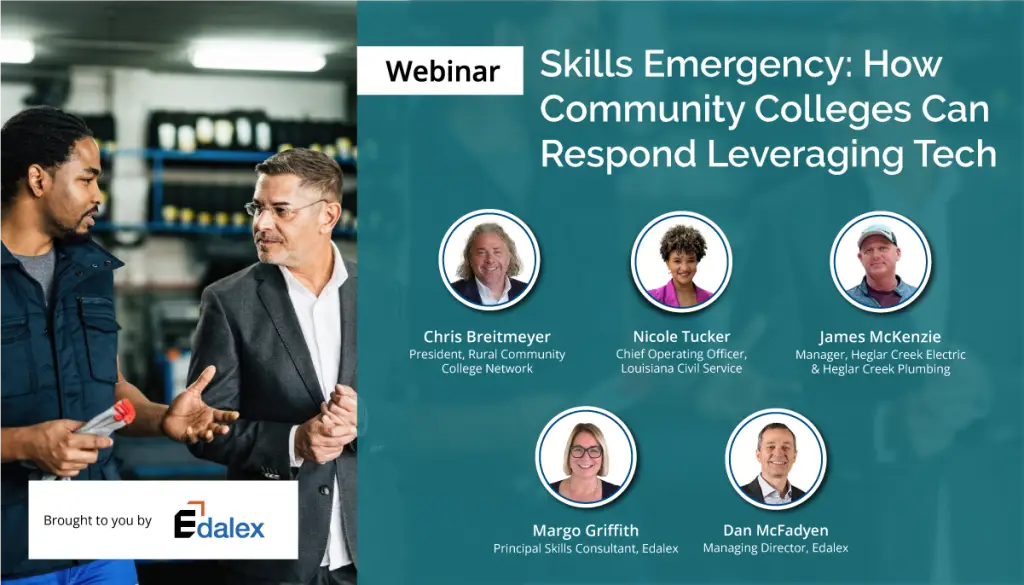
Edalex, a software development company that connects learning, skills, and evidence, recently hosted an engaging cross-sector webinar, “Skills Emergency: How Community Colleges Can Respond Leveraging Tech.” Moderated by Dan McFadyen, Managing Director of Edalex, the session explored the crucial role of community colleges in addressing the growing skills gap and how technology can empower them in this mission.
Community Colleges – Now, Tomorrow, and Into a Skills-Based Future

Community colleges have long served as vital hubs for accessible education and workforce development. Adapting to the evolving job market, they are increasingly embracing skills-based learning. This shift prioritises practical skills and industry alignment, preparing learners for a future where skills are paramount. In this information-rich Credentialate guide, we explore: How are community colleges adapting to skills-based learning? What role do CTE programs play in this adaptation? How do community colleges address the skills gap? What is the significance of micro and macro industry alignment? How are community colleges facilitating tech enablement of learners? What is the future of community colleges in a skills-based ecosystem?