
Community colleges have long served as vital hubs for accessible education and workforce development. Adapting to the evolving job market, they are increasingly embracing skills-based learning. This shift prioritises practical skills and industry alignment, preparing learners for a future where skills are paramount. In this information-rich Credentialate guide, we explore: How are community colleges adapting to skills-based learning? What role do CTE programs play in this adaptation? How do community colleges address the skills gap? What is the significance of micro and macro industry alignment? How are community colleges facilitating tech enablement of learners? What is the future of community colleges in a skills-based ecosystem?
The Essentials: Community Colleges - Now, Tomorrow, and Into a Skills-Based Future
They are creating CTE programs, collaborating with businesses, focusing on digital literacy, providing hands-on training, and aligning with industry needs both locally and nationally. They are also offering credit for what have traditionally been non-credit earning programs, and embracing tech enablement.
CTE programs are vital, offering industry-aligned, hands-on training. They bridge the gap between education and employment, providing pathways for advancement in high-demand fields like healthcare and IT. They also help meet local workforce needs and can entice companies to relocate to the area.
They align their programs with evolving industry demands, offering advanced CTE and vocational training. They focus on skills-specific training rather than just degrees, addressing the need for “qualified workers” with verifiable skills, and provide both micro and macro alignment with industry needs.
Micro-alignment addresses local industry needs, like welding for a steel plant. Macro-alignment focuses on larger needs, like software design. Both ensure graduates have relevant skills and boost local economies. Micro-alignment can also inspire industries to relocate to areas with workforce education programs.
They incorporate digital tools, offer hybrid learning, ensure access to technology (like loaner laptops), and focus on digital literacy skills. They also support Personal Evidence Records (PERs) and digital badges to showcase skills, and are often more innovative than larger institutions in adopting these.
They will focus on increased certification programs, skills-focused associate degrees, and credit for CTE work. They’ll also emphasize skills visibility, portable learner evidence records, and adapting to technological changes, especially in STEM fields. They will also promote lifelong learning and inclusion.
Don’t have time to read it now?
Enter your email below to have a PDF copy sent direct to your inbox:
The Full Story: Community Colleges - Now, Tomorrow, and Into a Skills-Based Future
- The Current State of Community Colleges
- Micro and Macro Industry Alignment
- The Move Toward Tech Enablement
- STEM and Community Colleges
- Adapting to Technological Changes: The Role of Digital Literacy
- Short-Term Certificate vs. Longer-Duration Degree Programs
- Building an Inclusive Learning Environment For All Learners
- Projections For Community Colleges In The Evolving Job Market
Community colleges have long been a local staple when it comes to higher education. They’ve been a more affordable option for disadvantaged or underserved learners, a training ground for skilled workers needed in local businesses, and can offer innovative programs like dual enrollment with high schools. They have even created certificate programs aimed at teaching learners a particular trade.
As the job market changes, community colleges are increasingly adopting skills-based learning approaches. This shift is crucial for preparing learners with the skills that employers require. Key aspects of this change include:
- Creation of career and technical education (CTE) programs
- Collaboration with local businesses to ensure curriculum alignment with industry demands
- Focus on fundamental skills such as digital literacy, communication, and critical thinking
The move towards skills-based learning is not just a passing trend; it is necessary for community colleges to stay relevant in a constantly changing environment. By prioritizing practical skills development, these institutions are shaping the future of education and workforce preparedness. The evolution of community colleges demonstrates their dedication to promoting economic mobility and supporting the goals of millions across the nation.
These smaller institutions have better local awareness, can pivot programs faster than large universities and colleges, and may already have the learning data needed to step into the future of education.
What role will community colleges play in the new skills ecosystem? What will that skills ecosystem look like? How will community colleges impact the tech enablement of learners, educators, and employers?
Let’s take an in-depth look.
The Current State of Community Colleges
Community colleges play a crucial role in the U.S. education system. They provide accessible education beyond high school and help individuals prepare for the workforce. Commonly called two-year colleges, they offer various programs such as associate degrees, certificates, and partnerships with four-year universities for those pursuing bachelor’s degrees.
Enrollment trends show that community colleges are attracting learners from various demographic backgrounds. Data shows nearly 6 million students enroll in these institutions each year.

Several factors influence enrollment patterns:
- Age diversity – Community colleges serve learners of all ages. While many recent high school graduates choose this path, a significant population of adult learners also return to school seeking new career opportunities or personal growth.
- Ethnic and socioeconomic representation – Community colleges play a vital role in promoting equity by serving underrepresented populations. Many learners come from diverse ethnic backgrounds and lower socioeconomic status, highlighting the role of these institutions in providing educational access.
Community colleges offer courses geared toward a more specific skill set suited for a single career or industry with outstanding results. These courses often change the job landscape of a particular area and provide local companies with the workers they need to be successful.
These Career and Technical Education (CTE) programs are the lifeblood of many community colleges. Here are some key advantages:
- Industry alignment – many CTE programs are developed in collaboration with local businesses to ensure they meet current workforce needs. This alignment increases the chances of graduates finding employment in their chosen fields.
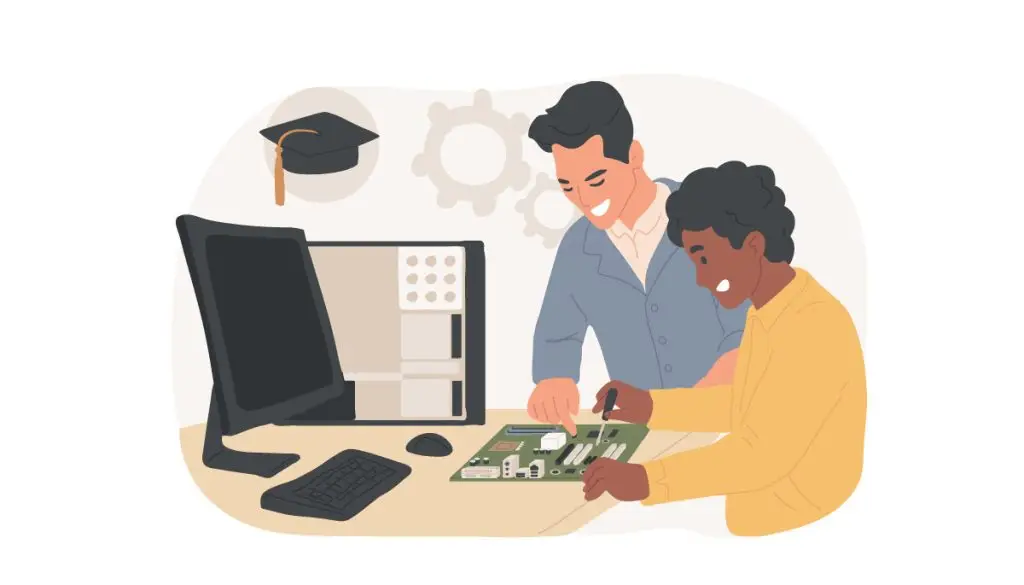
- Hands-on training – practical experience is an essential component of CTE education. Through internships, apprenticeships, or laboratory work, learners gain real-world skills that enhance their employability prospects.
- Pathways for advancement – CTE graduates often have opportunities for further education or immediate job placement in high-demand industries such as healthcare, manufacturing, or information technology.

As we shift towards a skills-based economy, more importance is placed on the skills needed to do a job rather than where and how those skills were learned. The workplace shift is from “we need people to fill these job positions” to “we need people who have these skills.” According to Udemy, “85% of HR executives are already or are considering redesigning the way work is organized so that skills can be flexibly ported across work over the next three years.”
These programs are gaining traction, not only with lifelong learners, but with high school students as well, those who are looking to enter the workforce quickly, and in countries like the United States, whose learners are seeking to develop skills without as much student debt.
- Nearly half of U.S. high school students participated in CTE courses during the 2016-2017 academic year, totaling approximately 8.3 million students, and in a post-COVID world, that number has continued to increase.
- CTE programs play a crucial role in guiding learners toward specific career paths, especially in fields like engineering and business.
The significance of these programs extends beyond mere participation numbers. They serve as foundational stepping stones for learners aiming to transition smoothly into technical careers. By offering hands-on learning experiences and industry-relevant curricula, CTE programs help bridge the gap between education and employment.
Community colleges are poised to be on the leading edge of this transition. Organizations will have to change how they work, and the talent they already have will need reskilling and retraining on a scale of 6 out of every 10 workers, according to the same report by Udemy.
What does that mean for educators? It means a move toward industry alignment in new ways and leaning toward the tech enablement of learners like never before. Let’s take a deeper look.
Micro and Macro Industry Alignment
What is the skills gap, exactly? It means that many workers in various industries need post secondary education, but that education is not tied to degrees or certifications necessarily, but instead reveals a need for skills alignment. In fact, according to a report by the American Association of Community Colleges (AACC), “By the start of the next decade, sixty-five percent of American jobs will require some postsecondary education or training.”
The key is “Nearly half of those positions will require less than a bachelors degree and represent the fastest growing of all the job categories.” What do those positions require, then? They require skills, often defined as “qualified worker” or “qualified applicant.”

- As industries evolve, so do their skill requirements. CTE programs are designed to align closely with these workforce demands, ensuring that learners acquire the competencies needed by employers.
- Community colleges play a pivotal role in this ecosystem by delivering advanced CTE offerings that build on high school foundations. These institutions often partner with local businesses to develop curricula that reflect current industry standards, thereby enhancing learner employability upon graduation.
There are two issues here: first, degrees and certifications do not always reveal the potential employee’s skills. A bachelors in communication, for example, can mean a variety of things and may or may not encapsulate the skills an employer needs. Thus, even if they possess the skills a company needs, the worker has no verifiable way to express that.
The second is that applicants really do not possess the skills needed by a rapidly evolving industry or company. They need additional education to gain them, but they rarely need to return to college. Instead, they require skills-specific training.
By integrating vocational training within their educational frameworks, community colleges ensure that graduates are not only prepared for immediate job opportunities but also equipped for long-term career growth. This alignment is critical as it addresses both learner aspirations and employer needs, fostering a well-prepared workforce ready to tackle the challenges of an ever-changing job market. Community colleges are uniquely poised to offer this training.
- They are geographically dispersed in areas where access to other education is lacking.
- These institutions have already proven excellence in workforce development programs, from certifications to associate degrees to industry-specific programs designed to turn learners into earners.
- Community colleges are open-access and available to accomplished learners and those lacking basic learning skills equally. In fact, they can be a place for learners to “catch up” on the basics, making it possible to advance their education and skills further.
The key lies in both micro and macro alignment with industry locally and nationally.
Micro-Alignment
Because of their unique geographic positioning, community colleges often serve local industries in unique ways. For example, a community with a steelworking plant may have a community college that teaches welding, while one that has a computer manufacturing plant might offer soldering and microtechnology classes. Automotive programs serve local shops, chef and restaurant management programs serve local restaurants, and more.
This is often driven by the industry itself and the need to train locals to fill positions in their geographic area, but it benefits the community overall in various ways.
However, the creation of programs can often also inspire industries or even entice companies to relocate to areas where workforce education is occurring.
These programs, often called workforce development initiatives, include:
- Collaboration with local businesses – many community colleges partner with local industries to tailor programs that align with specific skill requirements. This collaboration ensures that graduates are prepared for immediate employment in their communities.
- Short-term training programs – Community colleges increasingly offer short-term certificates and training programs designed to quickly upskill individuals for available jobs. These programs focus on practical skills relevant to specific roles, making them attractive options for those looking to enter the workforce swiftly.
- Focus on middle-skill jobs – as we have stated, research indicates a significant demand for middle-skill jobs – positions that require more than a high school diploma but less than a four-year degree, such as healthcare, information technology, and skilled trades.
These programs often allow learners to prepare for these third-party credentials, but in the past, different institutional offices managed credit and non-credit certificates. This created a problem for those learners who wanted to return to enhance their education, but didn’t receive credit for classes they’d already completed or workforce experience.
As a result, many community colleges are now working to offer credit for what have traditionally been non-credit earning programs, offering learners a chance to return and further pursue their career goals with recognition for what they have already accomplished in their previous training.
Macro-Alignment
In the case of macro-alignment, community colleges attempt to align with larger overall industry needs. Programs like CAD, software design and engineering, coding programs, and more are designed to give learners opportunities beyond local businesses. Local governments have been increasingly supporting these programs as remote work has become possible and even the norm in many industries. The local economy still reaps the benefits of gainfully employed residents who may work for companies located anywhere in the world.
The boom of these “Zoom towns,” as they were labeled during the COVID-19 crisis, has also seen an increase in certification program offerings. Community colleges have also begun to specialize while offering remote and hybrid classes designed to serve learners in various life circumstances.
There is also another aspect to Macro alignment. To ensure their alignment with other educators, community colleges work with K-12 programs in their area, often offering college credit for courses taken in high school. At the same time, they offer continuing education through alignment with four-year colleges both regionally and nationwide, something that has not always happened.
In short, regarding industry and educational alignment, community colleges are uniquely positioned to transition to enabling the skills-based ecosystem. However, they are also in a position to encourage the tech enablement of learners in a meaningful and unique way
The Move Toward Tech Enablement
As we move toward tech enablement, one of the important things to understand is what skills employers are looking for in today’s market, informing what skills learners need to show. According to the Community Colleges Research Center, there are four categories of skills employers are increasingly looking for:
- Foundational skills – in math, reading, and writing
- Technical skills – required for specific positions;
- Digital literacy skills – to not only communicate but analyze data and interpret it using the latest digital technology, most recently including generative AI platforms
- A broad mix of interpersonal and cognitive skills – central to collaboration, critical thinking, and customer service

This is a mix of both technical, hard skills, and soft skills that impact company culture, client and customer relations, and more. Because employees are looking for them, learners need to prove they have them. Within these categories, employers are looking for:
- Technical proficiency – understanding industry-specific tools and technologies is essential.
- Soft skills – employers seek candidates who can communicate effectively, work collaboratively, and demonstrate problem-solving abilities.
- Digital literacy – as workplaces become increasingly digital, familiarity with software applications and online tools is critical.
Proving these skills involves more than a college transcript containing completed classes and grades. Instead, it means a richer Personal Evidence Record (PER) that contains skills data. This can be drawn from Rich Skills Descriptors (RSDs), course metadata, and individualized instructor feedback.
This has already been happening for work training programs, but not always in a digital format. However, when it comes to adopting digital badges and skills visibility, community colleges are often better suited to innovate than larger four-year institutions. The key is funding, but many local groups and industries see the long-term value of this initial investment.
Industries have also been supportive of these programs. While many can, and some have formed internal courses and certification programs, a decentralized standard has greater appeal for learners, educators, and other employers. Credentials coming from an external source are more portable and meaningful, and funding such efforts is often much less costly than the development and hiring implicit in creating their own programs.
Innovation is happening, but meaningful change means increasing these efforts. What does that mean for the future of community colleges?
STEM and Community Colleges
Community colleges are uniquely positioned to handle the challenges of the transition to a skills-based ecosystem, including in partnership with local K-12 programs in their area. According to EdWeek, nearly half of the high school student population enrolled in some kind of Career and Technical Education (CTE) program, many in fields normally associated with associate and bachelor degrees.
In reality, many jobs in STEM-related careers no longer require a degree, and often CTE and ongoing training is a better solution. It’s also more affordable for many students who shy away from the cost of higher education in the United States.
Community colleges play a crucial role in STEM, and here are some reasons why:
- Workforce relevance – as industries evolve, the necessity for a workforce well-versed in STEM disciplines has never been greater. Community colleges are strategically positioned to offer programs that align with these evolving demands.
- Interest – engaging learners in STEM fields early can significantly impact their career trajectories. Community colleges can cultivate a new generation of STEM professionals by fostering interest through innovative curricula and hands-on learning experiences.
However, STEM and career initiatives are not without challenges. Projections from a Georgetown study show that degrees will still matter going forward, depending largely on the career field. According to the survey, many of those jobs will require only an associate degree and many of these industries are evolving in new ways.
The future of community colleges likely involves:
- Increased certification programs and a continuing emphasis on CTE courses
- Offering college credit for CTE work so learners can return to further pursue their education with skills, evidence, and credit for their academic accomplishments
- The offering of relevant associate degrees that are skills-focused and emphasize skills visibility
- Credits that satisfy the transfer requirements of four-year universities nationwide to mitigate the “that course doesn’t count, and you have to retake it” dilemma many learners face when moving forward toward bachelor’s and post-graduate degrees.
Adopting career readiness as a goal, promoting skills visibility, granting credits for traditionally non-credited work, and creating more robust and portable learner evidence records are all essential.

Adapting to Technological Changes: The Role of Digital Literacy
The need for digital literacy may seem like a no-brainer when talking about the future of community colleges, but it bears mentioning that even CTE learners enter fields that have become STEM focused or at least STEM-adjacent. For example, as technology in automobiles has advanced, the need for mechanics to understand onboard computers and sensors has replaced the wrench as one of the top tools of the trade.
What does that mean to community college programs? Changes include:
- Curriculum development – Community colleges are redesigning courses to incorporate digital tools and platforms. Programs now emphasize coding, data analytics, and online collaboration skills that are essential in various industries.
- Hybrid learning models – many institutions have adopted blended learning approaches, combining traditional classroom experiences with online instruction. This allows greater flexibility for learners while enhancing their digital competencies.
- Access to technology – ensuring equitable access is vital. Community colleges are investing in resources such as:
- Loaner programs for laptops and tablets.
- Online learning platforms that are accessible to all learners, regardless of their background.
Community Colleges – now, tomorrow, and the future – hinge on this technological integration. By embracing digital literacy, they equip learners with the necessary skills to thrive in careers where digital literacy is no longer optional but a must.
Short-Term Certificate vs. Longer-Duration Degree Programs
It is important to understand the differences and pros and cons of both short- and long-duration degree programs from an employers’ and learners’ perspective.
Short-term certificates:
- Pros – quick entry into the workforce; focused skill sets.
- Cons – may lack depth for complex roles.
Longer-duration degrees:
- Pros – comprehensive education; better preparation for advanced positions.
- Cons – longer time commitment; potential financial burden on learners.
This is why the focus must be on lifelong learners. The degree or certificate earned today may not be sufficient for the jobs of tomorrow. The time of getting a degree, entering a job or career field, and staying there until retirement is gone for most people.
This is why it is so vital for educators to adopt the attitude that “all learning counts” and community colleges are at the forefront of this movement.

Building an Inclusive Learning Environment For All Learners
Underserved populations face significant challenges when accessing education opportunities at community colleges even though these schools are doing a better job than most universities. These challenges include:
- Financial barriers – many low-income learners struggle with tuition and associated costs, limiting their ability to enroll, especially in the United States, where even community college tuition rates remain unaffordable for many.
- First-generation college learner issues – navigating college systems can be overwhelming for those without familial guidance, especially in underserved communities. This is where the “community” aspect of community colleges becomes vital.
Creating a more inclusive campus culture where diversity is valued requires intentional strategies:

- Targeted support services – implement mentorship programs connecting first-generation learners with peers or faculty who can provide guidance.
- Flexible scheduling options – offering evening and weekend classes accommodates working learners, increasing accessibility.
- Cultural competency training – faculty and staff should engage in training that enhances understanding of diverse backgrounds, fostering a supportive environment.
Community colleges are evolving to address these concerns as they prepare for the future. By prioritizing inclusivity, they ensure that all learners feel supported academically and socially.
Projections For Community Colleges In The Evolving Job Market
If the study from Georgetown is correct, the need for associate degrees or even just a jump start on a degree program will be a key to the future of many learners. Here’s what it means to community colleges.
Job growth projections:
- An estimated 18.5 million job openings will arise each year from 2021 to 2031. Of these, approximately 12.5 million will require a college education.
- Fastest-growing sectors demand higher education levels, highlighting the need for community colleges to adapt their programs accordingly.
Economic mobility:
- Community colleges serve as vital pathways for economic mobility, offering affordable options that are accessible to diverse populations.
- Tailoring educational pathways to align with labor market needs can help learners secure better-paying jobs and contribute to economic growth.
Community colleges play a crucial role in shaping education and meeting workforce needs. By adapting to skills-based learning models, these institutions can:
- Stay relevant in the education system
- Prepare learners for the changing job market
- Provide accessible education opportunities for economic mobility
As community colleges embrace workforce development initiatives, they will increasingly focus on aligning their programs with industry demands. This commitment not only prepares graduates for immediate employment but also fosters long-term career success.
All these goals require a shift. Implementing tools like openRSD to house rich skill descriptor collections and personal learning dashboards like those powered by Credentialate enables innovative solutions to the challenges created by those shifts.
Those community colleges that embrace the skills ecosystem, work to spotlight career readiness, and prepare learners with real-world skills will be on the cutting edge of tomorrow’s education, and many are already doing so today.
At Edalex, we’re here to help. We can assist individual colleges or entire educational organizations to put the tools in place that will enable you to step into the tech enablement of learners and, therefore, into the future of education. Want to learn more? Contact us today for more information and a demonstration of how our solutions can work for you. We’d love to be with you every step of the way.
Let’s work together to change the journey from learner to earner, and transform the world of education and employment for a better tomorrow.
Want a copy? Email it for later
Enter your email below to have a PDF copy sent direct to your inbox: