EDALEX GUIDES

A Comprehensive Guide to Competency Based Education

A Comprehensive Guide to Competency-Based Education (CBE)

Competency-Based Education (CBE) is reshaping the educational landscape by prioritising skill mastery over time spent in the classroom. As the demand for adaptable, work-ready graduates grows, CBE offers flexible, learner-centric pathways that prepare individuals for the modern job market. This in-depth Credentialate guide explores: What is competency-based education and how does it differ from traditional learning models? What benefits does CBE offer learners and institutions? How do employers view CBE graduates and their skill sets? What role does technology play in enabling and scaling CBE? And what does the future hold for competency-based education and lifelong learning?

Read More »
Edalex Guide - Community Colleges Now Tomorrow and Into-Skills-Based Future

Community Colleges – Now, Tomorrow, and Into a Skills-Based Future

Community colleges have long served as vital hubs for accessible education and workforce development. Adapting to the evolving job market, they are increasingly embracing skills-based learning. This shift prioritises practical skills and industry alignment, preparing learners for a future where skills are paramount. In this information-rich Credentialate guide, we explore: How are community colleges adapting to skills-based learning? What role do CTE programs play in this adaptation? How do community colleges address the skills gap? What is the significance of micro and macro industry alignment? How are community colleges facilitating tech enablement of learners? What is the future of community colleges in a skills-based ecosystem?

Read More »
Edalex Guide - The Ultimate Guide to the Portrait of a Graduate

The Ultimate Guide to the Portrait of A Graduate

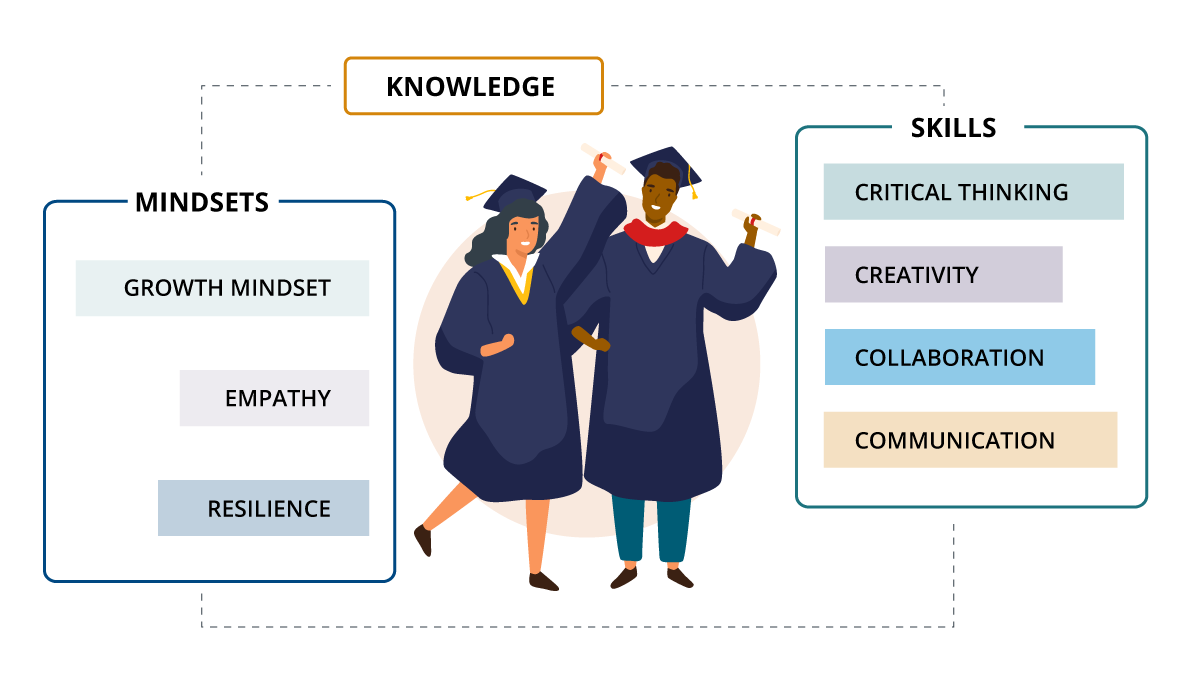
The Portrait of a Graduate framework redefines education by focusing on the holistic development of learners. Moving beyond grades, it emphasizes critical thinking, collaboration, and resilience – skills vital for life and work. Backed by digital credentials, Portrait of a Gradudate showcases achievements, aligning education with community needs and real-world readiness. In this information-rich Credentialate Guide, we ask: What is the Portrait of a Graduate framework? What are the intentions behind the Portrait of a Graduate framework? What are the key components of a Portrait of a Graduate? How has the Portrait of a Graduate framework been implemented in real-world settings? What benefits does the Portrait of a Graduate approach provide for learners? How do digital credentialing solutions enhance the visibility of learner skills?

Read More »
Edalex Guide - Lifelong Learning and Competency-Based Approaches for Changing Workforce

Lifelong Learning and Competency-Based Approaches for a Changing Workforce

Lifelong learning involves the continuous pursuit of knowledge throughout an individual’s life, extending beyond traditional educational settings. Competency-based education (CBE) focuses on mastering specific skills, regardless of the learning environment, allowing learners to progress at their own pace and acquire practical competencies for success. In this information-rich Credentialate Guide, we ask – What is lifelong learning’s role in today’s workforce? How does Competency-Based Education (CBE) differ from traditional education? Why are they important for organisations? What are the challenges in documenting skills acquired through lifelong learning? What strategies can educators use to foster lifelong learning?

Read More »
21st-Century Skills - What They Are and Why They’re Important

21st-Century Skills – What They Are and Why They’re Important

We often hear the term, “21st-century skills.” However, it is not often clear exactly what that means and how it relates to things like employability, education, and hiring. As old jobs fall victim to automation and advancing technology, the need for transferrable skills and new knowledge and competencies has increased. In this information-rich Credentialate Guide, we examine the workplace needs of the global economy, 21st-century terms and definitions, what skills are important and how are they are taught and assessed.

Read More »
Credentialate Guides - Tech Enablement of Next Generation Learning

Tech Enablement of Next-Generation Learning

There is an ongoing transformation of education towards a skills-focused and tech-enabled educational model. The learning community is shifting away from traditional four-year degrees, with major tech companies no longer requiring them and instead emphasising skills. In this information-rich Credentialate Guide, we ask – What is the Next-Generation Learning likely to look like? What are the challenges and opportunities associated with shifting to skills-based education? How can technology, such as digital credentials, be leveraged to create a more robust and accessible system for documenting and verifying skills and competencies? What role do community colleges, vocational education, and emerging technologies like AI play in the evolving education landscape.

Read More »
How Connecting Degrees to Careers Can Address the Decline in Degree Value

How Connecting Degrees to Careers Can Address the Decline in Degree Value

Four-year degrees have seen a marked drop in enrolment and completion rates in recent years. Learners are critically weighing the value of full degrees against typically shorter, less expensive skills-based learning, to quickly develop high-demand workplace skills. The investment in time and money – with no guarantee of work at the end – and the rise of skills-based hiring among employers are some of the key factors contributing to the decline in the perceived value of traditional degrees. In this information-rich Credentialate Guide, we ask – How much has the education landscape changed? What are the factors impacting enrolments? Where are learners going instead? And how can educators bolster the perceived value of degrees by connecting them more directly to work?

Read More »
What Learners Need from Employability

What Learners Need from Employability

All degrees are not created equal, and employers know that. They also know that just because a learner has completed a course of study does not mean they have both the soft and hard skills needed to perform the work in the position they are seeking. In other words, a degree does not equal employability in all cases. In this information-rich Credentialate Guide we explore what employability outcomes learners, educators and employers want.

Read More »
Employment vs. Employability Data - Assessing Current & New Data Needs

Employment vs. Employability Data – Assessing Current & New Data Needs

What’s the difference between employment and employability data? What can employability data tell us about a learner’s job or career prospects? In this information-rich Credentialate Guide we look at the currently available data and what data we could be capturing to give us a better understanding of learner employability, with the ultimate aim of driving graduate employability outcomes.

Read More »
Learner and Graduate Outcomes - What Your Education Gets You Now

Learner and Graduate Outcomes – What Your Education Gets You Now

What do current learner and graduate outcomes look like? From a societal perspective, what are we getting for our education spending? And are these acceptable given the needs of the new global economy? In this information-rich Credentialate Guide, we will look at what data we have from countries that collect and publish graduate outcome data – including Australia, the UK, the EU, and the United States – and explore how learner and graduate outcomes align with learner expectations and future workforce needs.

Read More »
A Comprehensive Guide to Competency Based Education

A Comprehensive Guide to Competency-Based Education (CBE)

Competency-Based Education (CBE) is reshaping the educational landscape by prioritising skill mastery over time spent in the classroom. As the demand for adaptable, work-ready graduates grows, CBE offers flexible, learner-centric pathways that prepare individuals for the modern job market. This in-depth Credentialate guide explores: What is competency-based education and how does it differ from traditional learning models? What benefits does CBE offer learners and institutions? How do employers view CBE graduates and their skill sets? What role does technology play in enabling and scaling CBE? And what does the future hold for competency-based education and lifelong learning?

Read More »
Edalex Guide - Community Colleges Now Tomorrow and Into-Skills-Based Future

Community Colleges – Now, Tomorrow, and Into a Skills-Based Future

Community colleges have long served as vital hubs for accessible education and workforce development. Adapting to the evolving job market, they are increasingly embracing skills-based learning. This shift prioritises practical skills and industry alignment, preparing learners for a future where skills are paramount. In this information-rich Credentialate guide, we explore: How are community colleges adapting to skills-based learning? What role do CTE programs play in this adaptation? How do community colleges address the skills gap? What is the significance of micro and macro industry alignment? How are community colleges facilitating tech enablement of learners? What is the future of community colleges in a skills-based ecosystem?

Read More »
Edalex Guide - The Ultimate Guide to the Portrait of a Graduate

The Ultimate Guide to the Portrait of A Graduate

The Portrait of a Graduate framework redefines education by focusing on the holistic development of learners. Moving beyond grades, it emphasizes critical thinking, collaboration, and resilience – skills vital for life and work. Backed by digital credentials, Portrait of a Gradudate showcases achievements, aligning education with community needs and real-world readiness. In this information-rich Credentialate Guide, we ask: What is the Portrait of a Graduate framework? What are the intentions behind the Portrait of a Graduate framework? What are the key components of a Portrait of a Graduate? How has the Portrait of a Graduate framework been implemented in real-world settings? What benefits does the Portrait of a Graduate approach provide for learners? How do digital credentialing solutions enhance the visibility of learner skills?

Read More »
Edalex Guide - Lifelong Learning and Competency-Based Approaches for Changing Workforce

Lifelong Learning and Competency-Based Approaches for a Changing Workforce

Lifelong learning involves the continuous pursuit of knowledge throughout an individual’s life, extending beyond traditional educational settings. Competency-based education (CBE) focuses on mastering specific skills, regardless of the learning environment, allowing learners to progress at their own pace and acquire practical competencies for success. In this information-rich Credentialate Guide, we ask – What is lifelong learning’s role in today’s workforce? How does Competency-Based Education (CBE) differ from traditional education? Why are they important for organisations? What are the challenges in documenting skills acquired through lifelong learning? What strategies can educators use to foster lifelong learning?

Read More »
21st-Century Skills - What They Are and Why They’re Important

21st-Century Skills – What They Are and Why They’re Important

We often hear the term, “21st-century skills.” However, it is not often clear exactly what that means and how it relates to things like employability, education, and hiring. As old jobs fall victim to automation and advancing technology, the need for transferrable skills and new knowledge and competencies has increased. In this information-rich Credentialate Guide, we examine the workplace needs of the global economy, 21st-century terms and definitions, what skills are important and how are they are taught and assessed.

Read More »
Credentialate Guides - Tech Enablement of Next Generation Learning

Tech Enablement of Next-Generation Learning

There is an ongoing transformation of education towards a skills-focused and tech-enabled educational model. The learning community is shifting away from traditional four-year degrees, with major tech companies no longer requiring them and instead emphasising skills. In this information-rich Credentialate Guide, we ask – What is the Next-Generation Learning likely to look like? What are the challenges and opportunities associated with shifting to skills-based education? How can technology, such as digital credentials, be leveraged to create a more robust and accessible system for documenting and verifying skills and competencies? What role do community colleges, vocational education, and emerging technologies like AI play in the evolving education landscape.

Read More »
How Connecting Degrees to Careers Can Address the Decline in Degree Value

How Connecting Degrees to Careers Can Address the Decline in Degree Value

Four-year degrees have seen a marked drop in enrolment and completion rates in recent years. Learners are critically weighing the value of full degrees against typically shorter, less expensive skills-based learning, to quickly develop high-demand workplace skills. The investment in time and money – with no guarantee of work at the end – and the rise of skills-based hiring among employers are some of the key factors contributing to the decline in the perceived value of traditional degrees. In this information-rich Credentialate Guide, we ask – How much has the education landscape changed? What are the factors impacting enrolments? Where are learners going instead? And how can educators bolster the perceived value of degrees by connecting them more directly to work?

Read More »
What Learners Need from Employability

What Learners Need from Employability

All degrees are not created equal, and employers know that. They also know that just because a learner has completed a course of study does not mean they have both the soft and hard skills needed to perform the work in the position they are seeking. In other words, a degree does not equal employability in all cases. In this information-rich Credentialate Guide we explore what employability outcomes learners, educators and employers want.

Read More »
Employment vs. Employability Data - Assessing Current & New Data Needs

Employment vs. Employability Data – Assessing Current & New Data Needs

What’s the difference between employment and employability data? What can employability data tell us about a learner’s job or career prospects? In this information-rich Credentialate Guide we look at the currently available data and what data we could be capturing to give us a better understanding of learner employability, with the ultimate aim of driving graduate employability outcomes.

Read More »
Learner and Graduate Outcomes - What Your Education Gets You Now

Learner and Graduate Outcomes – What Your Education Gets You Now

What do current learner and graduate outcomes look like? From a societal perspective, what are we getting for our education spending? And are these acceptable given the needs of the new global economy? In this information-rich Credentialate Guide, we will look at what data we have from countries that collect and publish graduate outcome data – including Australia, the UK, the EU, and the United States – and explore how learner and graduate outcomes align with learner expectations and future workforce needs.

Read More »