
How Connecting Degrees to Careers Can Address the Decline in Degree Value

Four-year degrees have seen a marked drop in enrolment and completion rates in recent years. Learners are critically weighing the value of full degrees against typically shorter, less expensive skills-based learning, to quickly develop high-demand workplace skills. The investment in time and money – with no guarantee of work at the end – and the rise of skills-based hiring among employers are some of the key factors contributing to the decline in the perceived value of traditional degrees. In this information-rich Credentialate Guide, we ask – How much has the education landscape changed? What are the factors impacting enrolments? Where are learners going instead? And how can educators bolster the perceived value of degrees by connecting them more directly to work?
Using Vision, Collaboration and Technology to Tackle Wicked Skills Challenges
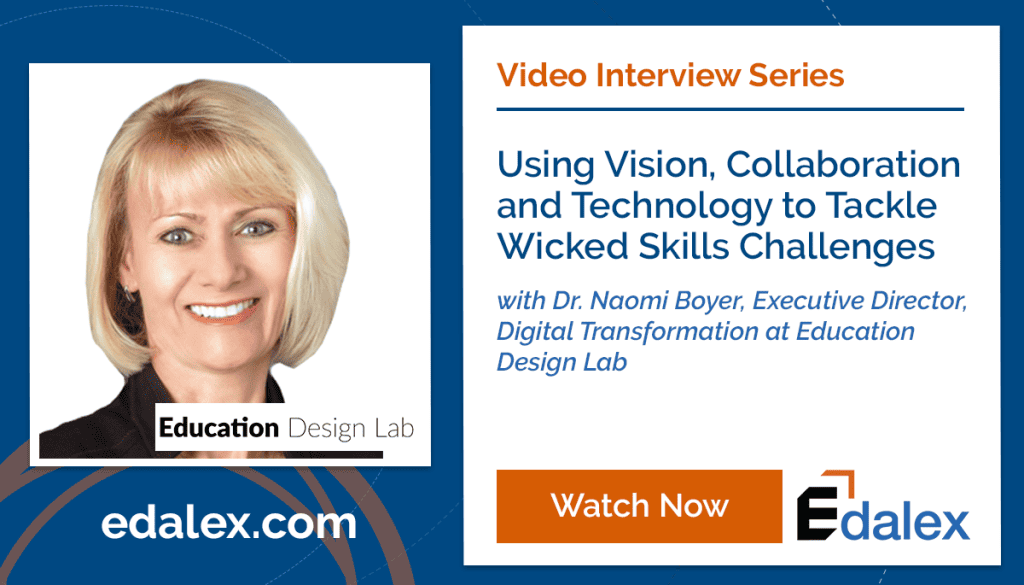
In this conversation style interview, Margo Griffith and Dr. Naomi Boyer, Executive Director, Digital Transformation at Education Design Lab (the Lab), explore how we can all use vision, collaboration and technology enablement to tackle wicked challenges in the skills ecosystem.
The House is On Fire – When It’s Innovate or Die, Skills Can Help You Respond

In a recent article titled “College Ed Must Adapt or Die”, Jason Wingard, the President of Temple University in Pennsylvania stated simply, “Consider this my burning platform memo for higher ed.” What was he referring to? There is a crisis happening in higher education right now, and if it were any other type of business, […]
Harnessing Your Skills Data: Recognition and Representation of Workplace Skills

What are the steps that lead to an organisation’s ability to produce personal evidence? How can organisations capture, aggregate and manage their skills data in an automated way? How can they bring to light underutilised dark data’ hiding in their existing systems? And how can they align learner performance data to industry recognised definitions and frameworks? This whitepaper details the what, how and why education providers of all types can participate fully in the burgeoning Skills Economy and prepare their learners for the future world of work.
How Education, Industry, Society and Technology are Converging to Embrace and Empower Alternative Credentials

In this conversation style interview, Dan McFadyen and Martin Bean, Founder and CEO of the Bean Centre, explore a how education, industry, society and technology are converging to embrace and empower alternative credentials.
A Fresh Take on Ethical and Machine Learning Imperatives to Create Truly Learner-Centric Micro-Credentials

In this conversation style interview, Dan McFadyen and Mark Keough, Chief Operating Officer of Intrinsic Learning, explore a fresh take on ethical and machine learning imperatives to create truly learner-centric micro-credentials.
Edalex announces new Education Design Lab partnership with focus on 21st century skills and personal skills evidence
Edalex, the EdTech company that unleashes the power of skills data, digital assets, and personal credentials, announces an exciting new partnership with Education Design Lab (the Lab). The collaboration focuses on synergies between the Lab’s 21st Century Skills Micro-credentials, Edalex’s Credentialate platform, and expertise from both organisations in mapping and surfacing personalised skills evidence from the […]
Edalex selected for Global Victoria EdTech Innovation Alliance project to assess employability outcomes from personalised evidence
Edalex, the EdTech company on a mission to surface learning outcomes, digital assets and the power of individual achievement, is thrilled to announce that they have been selected to receive funding in support of their Edalex Credentialate Alliance project, as part of the Global Victoria EdTech Innovation Alliance (GVEIA) program.
Bridging the Gap Between Digital Skills and Employability for the Future of Work
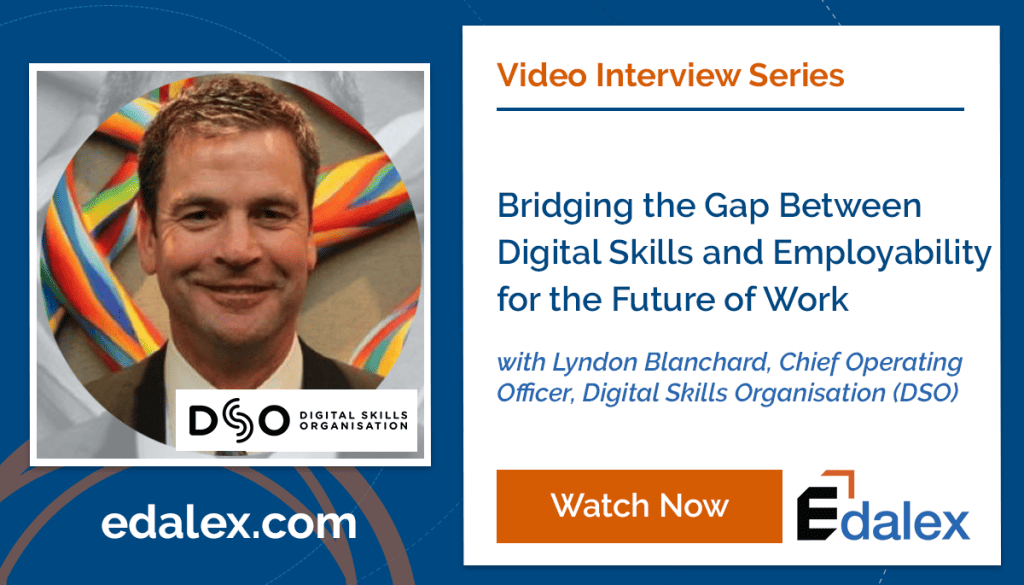
In this conversation style interview, Dan McFadyen and Lyndon Blanchard, Chief Operating Officer of the Digital Skills Organisation (DSO), discuss the demand for digital skills supply at both national and global levels and how the DSO are working to enable digital upskilling and reskilling and create a job-ready workforce.
Edalex selected for multiple OSN Skill Collaboratives to explore rich skill descriptors (RSD) and skills framework alignment
Edalex, the edTech company on a mission to surface learning outcomes, digital assets and the power of individual achievement, is thrilled to announce that they have been selected as part of multiple Skills Collaborative Projects, an initiative led by the Open Skills Network (OSN). The Open Skills Network (OSN) is a coalition of employers, education […]