
Author: International Labour Organization
Summary
Introduction
The report presents a comprehensive framework developed by the International Labour Organization (ILO) that identifies and categorises the core skills necessary for life and work in the 21st century. This framework addresses the challenges posed by global drivers of change, such as technological innovations, demographic shifts, globalisation, and the transition to a sustainable environment. The report also considers the impact of the COVID-19 pandemic on the future of work and the need for skills development to ensure decent work and personal well-being.
Core Skills Framework
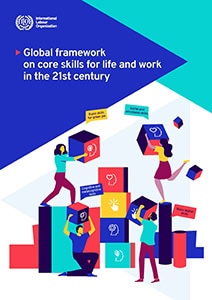
The ILO’s framework is designed to be adaptable to different national contexts and is structured around four key categories of core skills:
- Social and Emotional Skills:
- These skills include communication, collaboration and teamwork, conflict resolution, negotiation, and emotional intelligence. They are fundamental to effective social interaction and are increasingly in demand across all industries globally. The report emphasises that these skills are essential for adapting to the future of work, as they help individuals manage stress, empathise with others, and resolve conflicts.
- Cognitive and Metacognitive Skills:
- Cognitive skills involve the brain’s ability to process, understand, and apply new information. They include foundational literacies (such as literacy and numeracy), analytical and critical thinking, creative and innovative thinking, strategic thinking, problem-solving, and decision-making. Metacognitive skills, like self-reflection and learning to learn, are also crucial as they allow individuals to think about their thinking processes and continuously improve.
- Basic Digital Skills:
- As digital technology becomes ubiquitous in the workplace and daily life, basic digital skills are essential. These skills include the ability to use basic hardware, software, and operate safely in an online environment. The report highlights the importance of digital literacy in enabling individuals to interact effectively in the digital world.
- Basic Skills for Green Jobs:
- With the growing emphasis on sustainability, the report identifies the need for skills related to environmental awareness, waste reduction and management, and energy and water efficiency. These skills are necessary for individuals to contribute to a sustainable and green economy.
Implementation and Way Forward
The report outlines the need for a global approach to implementing this framework, which includes the development of digital toolkits and online courses to build the capacity of policymakers, educators, and learners. The framework serves as a foundation for lifelong employability and well-being, ensuring that workers can adapt to the rapidly changing demands of the labour market.