
What you can do with your digital credential
If you have been awarded a digital credential (e.g. learner), then it’s important to understand what it says about you and what you can do with it.
Here are some key things you can do with your digital credentials:
See Your Skills
Digital credentials often include information about your skills, such as a skills section where your skills are highlighted and may include a description and link to a skill definition in the form of a rich skill descriptor (RSD) – a standardised definition of a skill. When you click on the skill definition link, the RSD or other skill definition record will open, showing skill information, who authored it and what occupations you are eligible to apply for.
Explanatory video: What are rich skill descriptors (RSD)?
Where to find on a Personal or Provisional Evidence Record: View live example
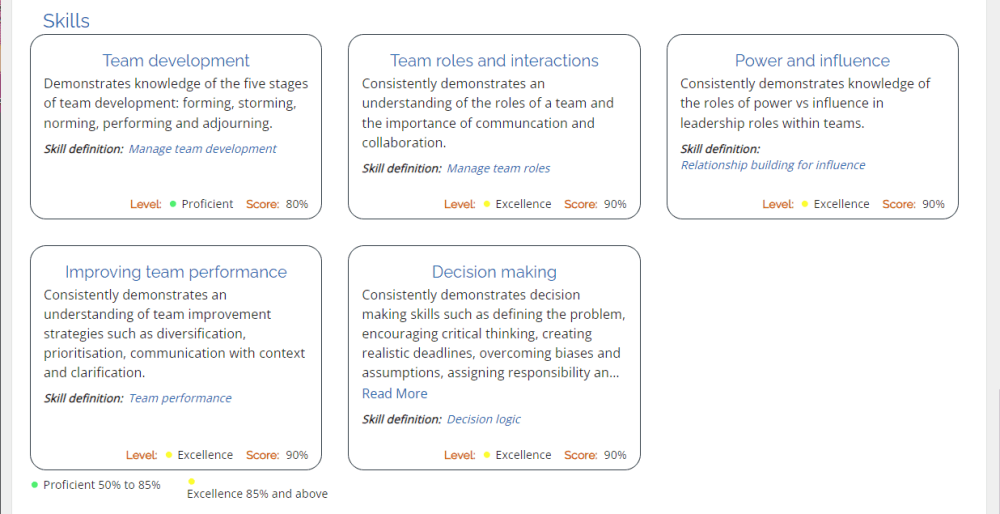
Understand Your Strengths
The Personal or Provisional Evidence Record includes qualitative and quantitative data, so that you can see the skills you excelled in. There may be an indication of the level reached, such as Bronze, Gold or Platinum, and a score, such as 90%. In discussions with prospective employers, you can highlight these strengths and show examples through the linked artefacts.
Where to find on a Personal or Provisional Evidence Record: View live example

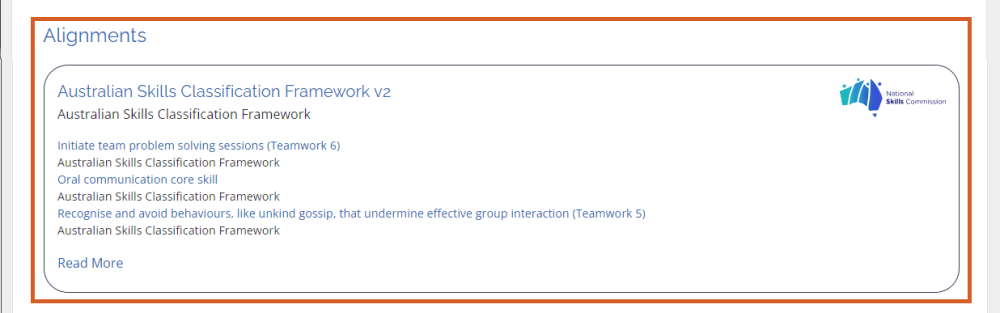
The Alignments section of a Personal or Provisional Evidence Record displays links to frameworks, such as the Australian Skills Classification Framework, which provides further information on the skills you have attained and at what level. Employers typically use these frameworks when creating job descriptions, so you can show a direct alignment between your achievements and the role requirements. This helps you differentiate yourself in employment discussions.
Where to find on a Personal or Provisional Evidence Record: View live example
Share Your Digital Credential
Learners can share their digital credentials quickly and securely with employers, educational institutions, or other relevant parties. This is often done through email, social media, or specialised credential-sharing platforms.
Tip:
- The digital badge and Personal or Provisional Evidence Record include sharing buttons. Just click on the medium with which you wish to send it – e.g. email or social media – and follow the on-screen prompts
Integrate in Online Profiles
Learners can integrate their digital credentials into their online profiles, such as LinkedIn or personal websites. This enhances your professional visibility and allows potential employers or collaborators to easily view and verify your qualifications.
Useful links:
Manage and Curate
When you received your digital credential, you will have received an invitation to create an account on a badge agent platform – such as Credly, Canvas Badges or Accredible. From within the badge agent, you can see your credentials, curate credential collections that highlight a cluster of achievements and share them with others.
Useful links from widely used badge agents:
Other Advantages and Opportunities
Portability – Digital credentials can be easily stored and accessed across different platforms, making them highly portable. Learners can carry their credentials in a digital wallet or repository, providing convenience and accessibility.
Verification – Digital credentials usually come with built-in verification mechanisms, such as cryptographic signatures or other technology. This ensures the authenticity of the credential, giving employers or institutions confidence in the learner’s achievements.
Continuous Learning Records – Digital credentials can serve as a comprehensive record of an individual’s learning journey. This includes not only formal qualifications but also micro-credentials, certifications, and other achievements gained throughout their educational and professional experiences.
Skill Demonstration – Digital credentials often include detailed information about the skills or competencies acquired by the learner. This helps individuals showcase their specific abilities and expertise to potential employers, making it easier for them to find opportunities aligned with their skills.
Lifelong Learning – With the rise of continuous learning and upskilling, digital credentials support the concept of lifelong learning. Learners can accumulate and showcase their credentials over time, demonstrating their commitment to staying current and relevant in their field.
Global Recognition – Digital credentials are often designed to adhere to international standards, making them recognized and accepted globally. This facilitates mobility for learners who may seek opportunities or education in different countries.
Adaptation to Emerging Technologies – Learners benefit from the integration of emerging technologies, such as blockchain, in digital credentials. This ensures security, immutability, and transparency, addressing concerns related to credential fraud.